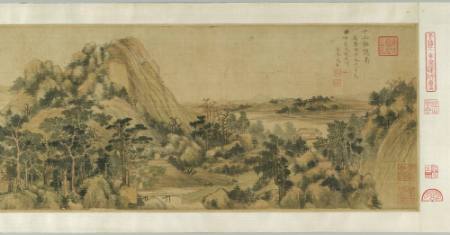
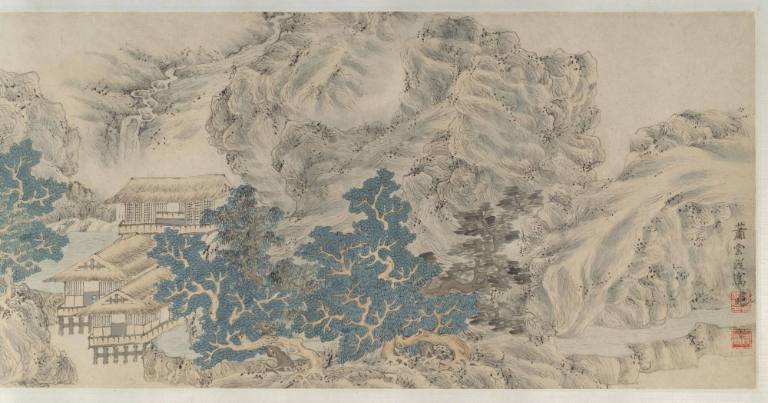



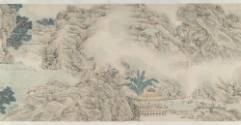
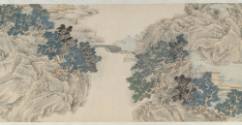
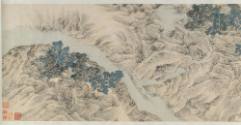
Landscape of Rivers and Mountains
Maker
Xiao Yuncong
(Chinese, 1596–1673)
MediumHandscroll: ink and colors on paper
Dimensions11 13/16 x 3 1/8 inches (30 x 8 cm)
CultureChina
ClassificationsPaintings
Credit LineGift of Professor Ray Wu and Christina C. Wu
Terms
- Paintings
- Landscape
- Chinese
- Handscroll
- ink and colors
- Bodies of water
- Bridges
- Complexes
- Fences
- Houses
- Landscapes
- Mountains
- Pavilions
- Plateaus (land forms)
- Rivers
- Stilts (structural elements)
- Trees
- Waterfalls
- Paper
Object number87.055.001
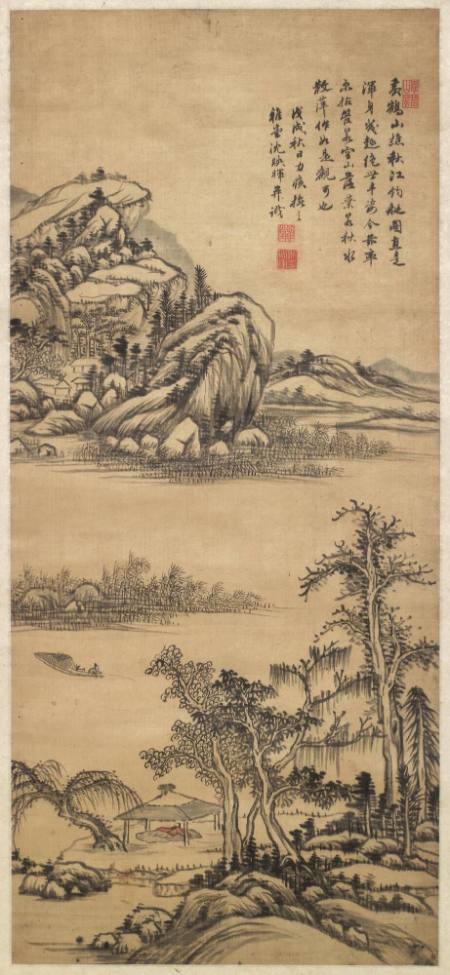
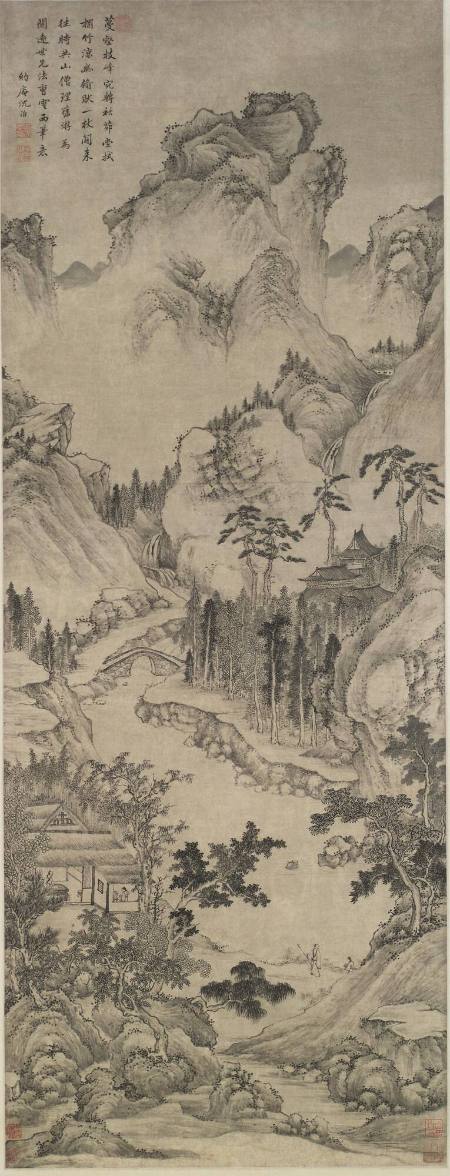
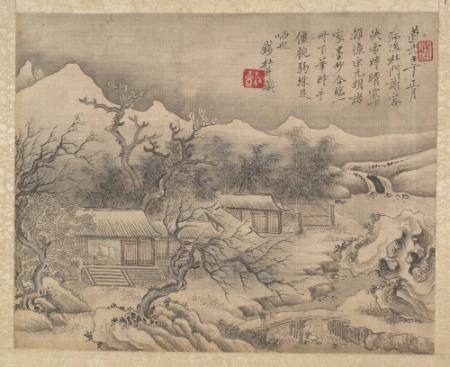
Label CopyXiao Yuncong was from Wuhu (in today’s Anhui province). His father enjoyed painting and encouraged Xiao Yuncong to become a painter. Xiao and his brother joined the Fushe Society in 1638 in the struggle against the powerful palace eunuch Wei Zhongxian (1568–1627). After the fall of the Ming dynasty, Xiao Yuncong called himself Zhongshan Laoren, “Elder of Mt. Zhong,” implying his remembrance of the Ming Imperial Tombs on Mt. Zhong. In this way he was a typical yimin (“leftover subject”) artist who devoted his energy to scholarship, poetry, painting, and traveling in nature as a means of protesting the rule of China by foreigners. When he signed his paintings, he would only date them with the Chinese cyclical date, thus rejecting the Qing imperial reign date.
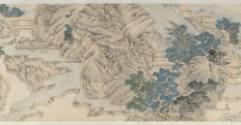
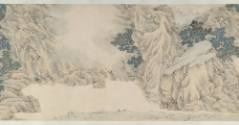
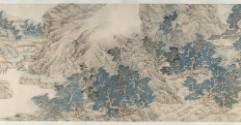
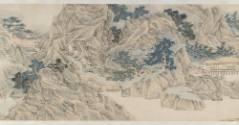
Xiao also excelled in poetry and calligraphy. Best known for his shanshui hua (mountains-and-water painting), he often depicted his surroundings. This handscroll is laid out like a journey, inviting the viewer to enter from a small path. Along the way one passes a tranquil village sparsely dotted with houses, and occasionally encounters villagers brewing tea and reading in their studios. This remote village exudes a sense of the utopian Peach Blossom Spring. During the chaotic time of dynastic change, and suffering from the pain of losing his country, Xiao Yuncong could find solace in these peaceful mountains.
Collections
Giuseppe Castiglione
18th by signature, probably 19th century copy