

El regreso del caníbal macrobiótico (The Return of the Macrobiotic Cannibal)
Artist
Enrique Chagoya
(Mexican, born 1953)
Date1998
MediumColor lithograph and woodcut with chine collé
Edition 10/30
DimensionsImage: 7 1/2 × 92 inches (19 × 233.7 cm)
ClassificationsPrints
Credit LineAcquired through the generosity of Truman W. Eustis III, Class of 1951
Terms
- Prints
- Mexican
Object number99.045
Label CopyEven the title of Enrique Chagoya’s codex signals a contradiction: a macrobiotic diet, consisting of mostly grains and vegetables, seems contraindicated for any cannibal. Yet it is contradiction that allows Chagoya to deliver his strongest messages. Like many Mesoamerican codices—including the Codex Borgia, from which the head of the Macrobiotic Cannibal is borrowed—the codex is read from right to left. From there, each page features a hodgepodge of images drawn from pre-Columbian, early modern European, Mexican, and North American visual culture. The Virgin of Guadalupe radiates from an écorché figure’s muscled chest while pre-Columbian figures meet their bloody fate at the steps of a colonnaded courtyard overlaid with orthogonal lines illustrating linear perspective. References to the Border Patrol, extraterrestrials (signaling illegal immigration), colonial invaders, superheroes, and religious icons create incongruous and sometimes unsettling juxtapositions.
The idea of cannibalization as a metaphor has been central to the discourse of modernism in Latin America since the publication in 1928 of the Manifesto antropófago by Brazilian poet Oswald de Andrade. For Andrade, antropofágia (cannibalism) signified “ingesting” the conventions of European modernism and transforming them, renewed, into something uniquely Brazilian. De Andrade was also inspired by the indigenous Tupí people, who were known to devour their enemies. For Chagoya, the idea of ingesting the culture of the colonizer or oppressor and turning it inside out is a strategy that he has employed throughout his oeuvre. By casting the West— under the guise of a “non-Western” pre-Conquest manuscript—as exotic, foreign, or a curiosity to be studied, Chagoya engages his self-denominated practice of “reverse anthropology” and forces us all to confront the cultural contradictions that are the products of the troubled times in which we live. ("This is no Less Curious: Journeys through the Collection" cocurated by Sonja Gandert, Alexandra Palmer, and Alana Ryder and presented at the Johnson Museum January 24 - April 12, 2015)
Collections
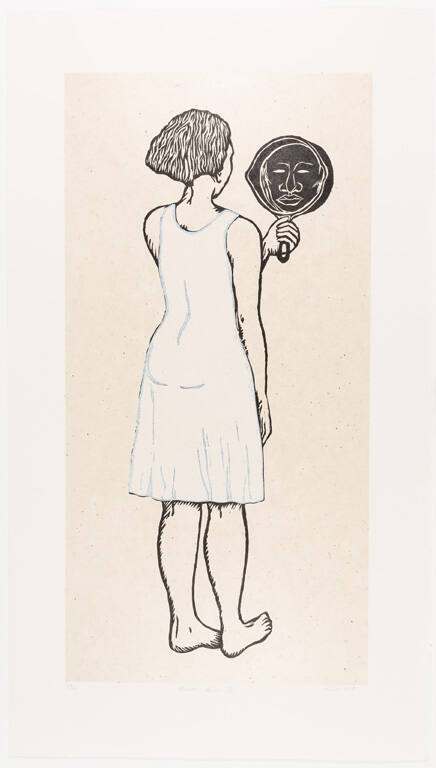
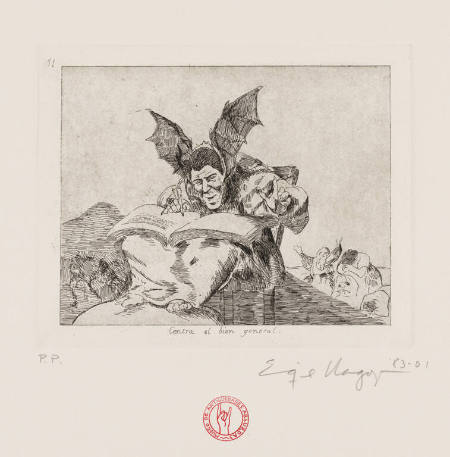
Enrique Chagoya
1983-2001 (published 2003)

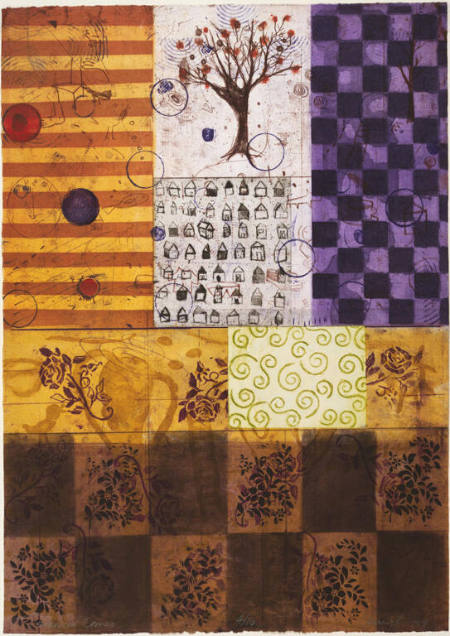
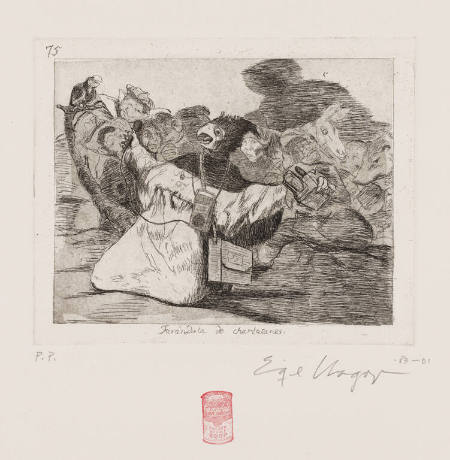
Enrique Chagoya
1983-2001 (published 2003)
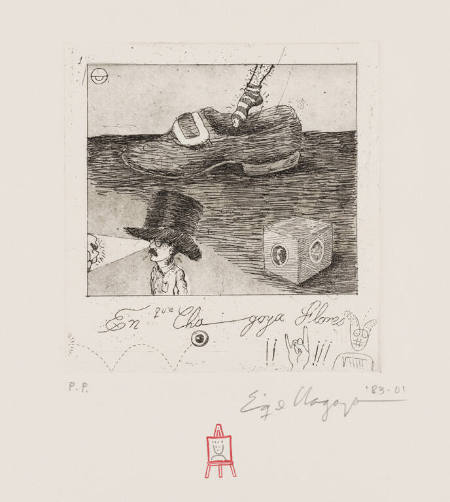
Enrique Chagoya
1983-2001 (published 2003)

Enrique Chagoya
1983-2001 (published 2003)
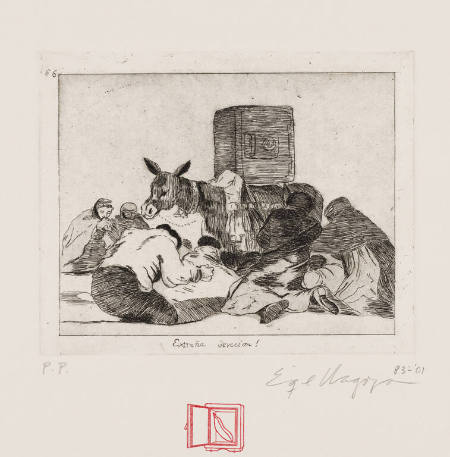
Enrique Chagoya
1983-2001 (published 2003)
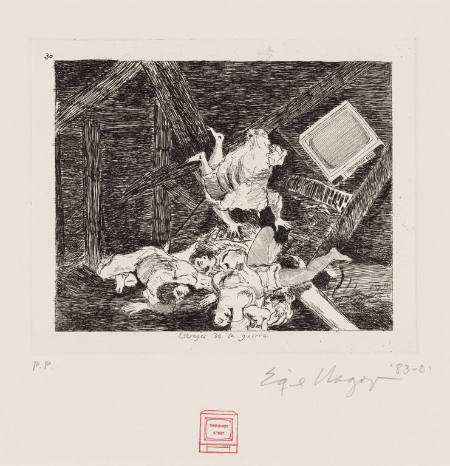
Enrique Chagoya
1983-2001 (published 2003)
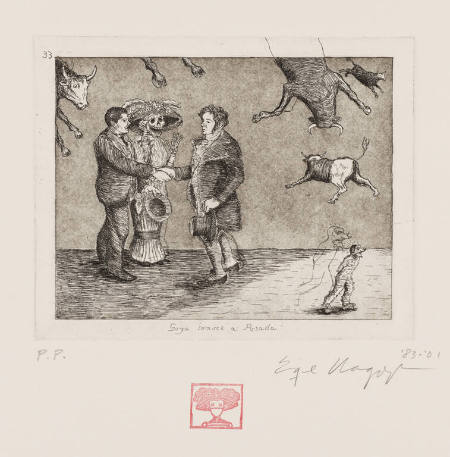
Enrique Chagoya
1983-2001 (published 2003)
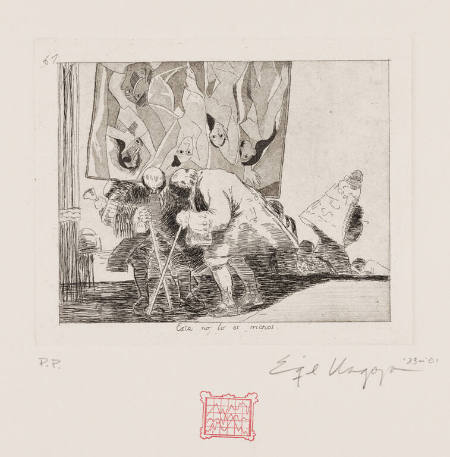
Enrique Chagoya
1983-2001 (published 2003)