
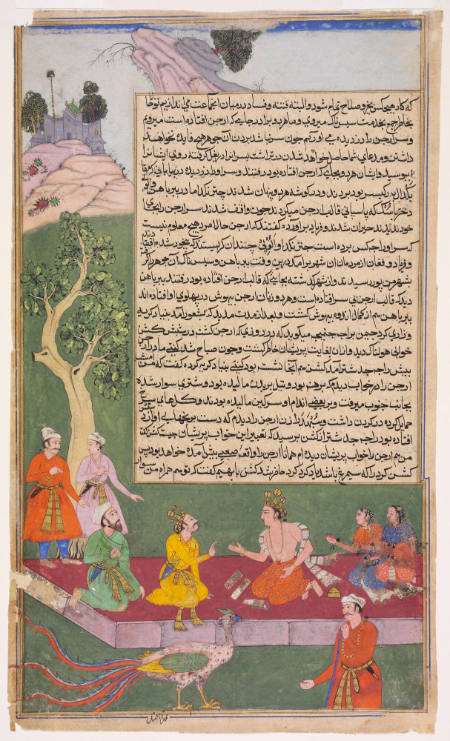
The Drowning of the Qungirat Mongol Ruler Husayn Sufi of Khwarazm (page from a Zafarnama manuscript)
Dateca. 1595-1600
MediumOpaque watercolors and gold on paper
Dimensions10 7/8 × 8 1/4 inches (27.6 × 21 cm)
CultureIndian, Mughal
ClassificationsManuscripts
Credit LineAcquired through the George and Mary Rockwell Fund
Terms
- Manuscripts
- Indian
- Opaque watercolor and gold
- Boats
- Rivers
- Turbans
- Horses
- Paper
Object number2005.027
Label CopyThe emperor Akbar (reigned 1556-1605), one of India's greatest art patrons, established an atelier that integrated Indian and Persian artists, a'd nurtured the development of a new style of painting that came to be known as the Mughal style, combining aspects of both Persian and indigenous Indian approaches, as well as influence from European and Chinese art. Akbar commissioned numerous lavishly illustrated manuscripts for his growing library, including histories and works of great Persian and Hindu literature. Among these was a series of histories of his ancestors: the Chingiznama (History of Genghis Khan); Timurnama (History of Timur); Zafarnama (Saga of Conquest), from which this page comes; and Baburnama (History of Babur, founder of the Mughal dynasty in India).
The Zafarnama was originally written by Timur¿s grandson Ibrahim Sultan, and rewritten in ornate prose by Maulana Sharaf al-din `Ali Yazdi in 1424-25. It relates the history of Timur and Khalil Sultan. This page, from the illustrated version commissioned by Akbar, is a classic example of the refined style associated with his reign. It shows a river scene with four boats carrying men and horses. The text refers to the drowning of a certain Husain, making likely the identification of the scene as the drowning of the Qungirat Mongol ruler Husayn Sufi of Khwarazm during Timur's campaign in Mughalistan in 1372. An inscription on the page attributes the painting to the artist Bahan and notes that it was corrected by the well-known artist Madhu (perhaps Bahan's father).
Collections
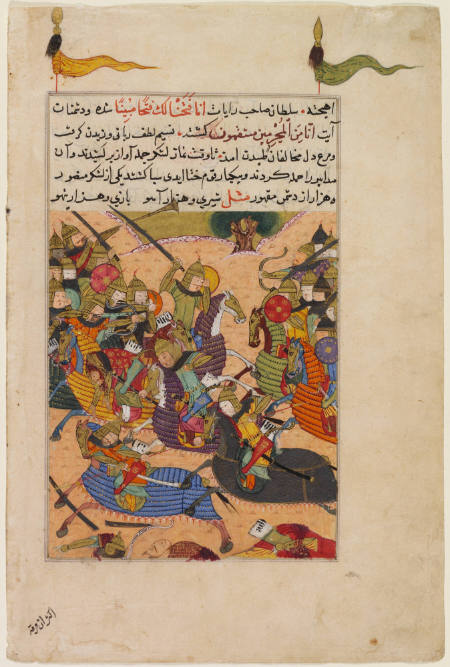
Atelier of Ibrahim Sultan ibn Shah Rukh
1438
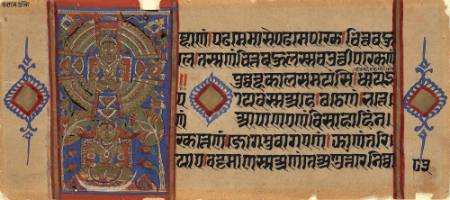

Unidentified artist
late 15th century

late 19th or early 20th century

early 16th century