

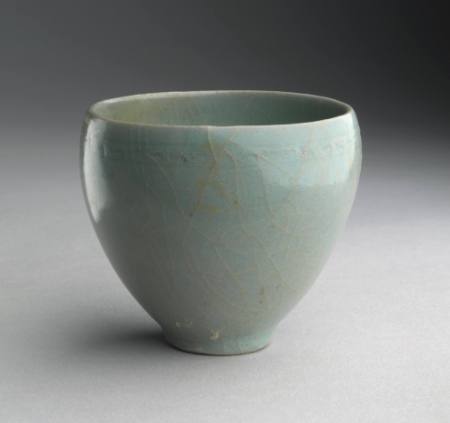
Cup
Dateca. Late 11th- 12th century
Place Made DisplayKorea
MediumGray stoneware with light blue-green glaze
Dimensions1 3/4 × 2 7/8 inches (4.4 × 7.3 cm)
CultureKorean
ClassificationsCeramics
Credit LineBequest of Colonel John R. Fox
Terms
- Ceramics
- Stoneware
- Korean
- light blue-green glaze.
Object number67.288
Label CopyBRIEF DESCRIPTION
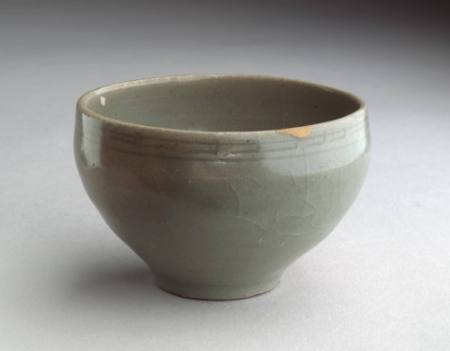
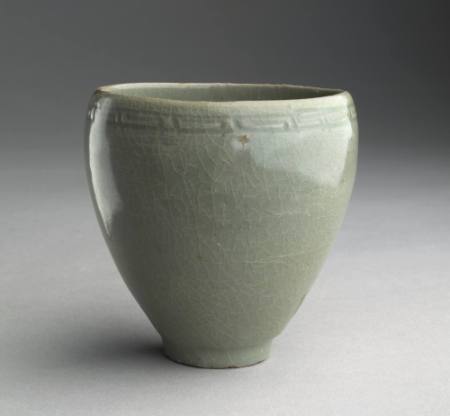
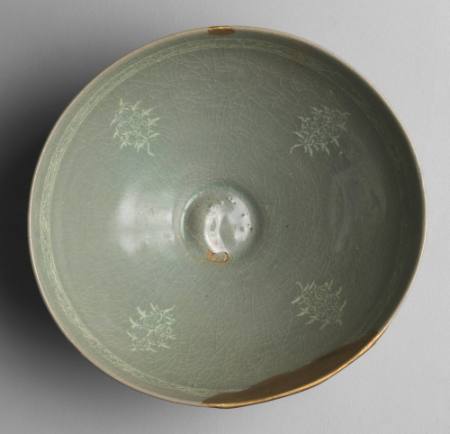
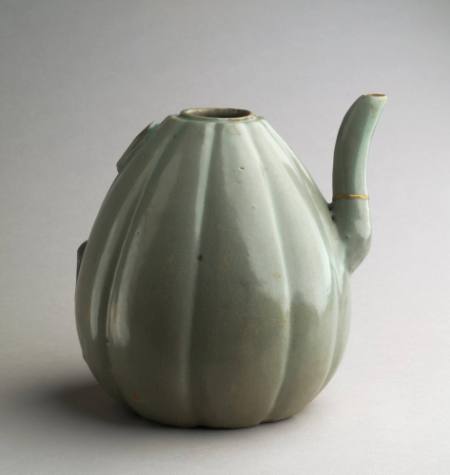
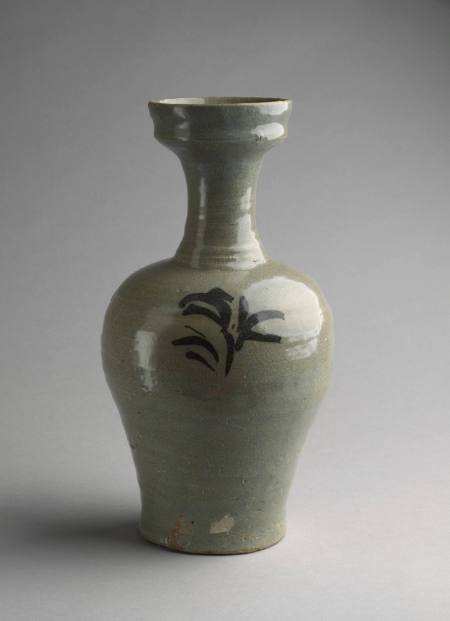
This ceramic cup, in the shape of a stylized flower, has incised designs on the exterior surface.
WHERE WAS IT MADE?
This cup was made in Korea during the Goryeo period.
HOW WAS IT MADE?
This cup was formed by pressing clay into a mold. It was finished with some hand carving and incising; the decorations along the outside of the cup were achieved by pressing into the clay with a sharp stylus before the cup was glazed and fired. When the glaze was applied it pooled in the slightly depressed, incised areas, making it thicker in those places, and therefore slightly darker. The green glaze on this cup is known in the west as celadon. The glaze contains iron oxides, which turn green when the vessel is fired in a reducing atmosphere. This technique came to Korea from China, along with a new kind of kiln construction. Goryeo ceramics were fired in long kilns (up to 60 feet long and four feet wide) built into the hillsides so that they climbed upwards. The insides of the kilns were lined with clay, and wood was used as the primary fuel for the fire.
The kilns were supervised by government officials, and most of the ceramics were made for members of the government and other aristocratic families. Potters did not enjoy high social status, nor were they regarded as artists in the way that painters were.
HOW WAS IT USED?
This cup was made to sit on a cup stand, and was used for drinking wine. Such high-quality cups (and their stands) were made for use by the royal family. The shape of this particular cup is based on a silver prototype.
WHY DOES IT LOOK LIKE THIS?
Notice the ten petal-like lobes of the cup; what type of flower does this form remind you of? Designs of lotus flowers adorn the outside. The lotus is a Buddhist symbol of purity and enlightenment. Buddhism had a strong presence in Korea during the Goryeo period, and the lotus flower can be seen on many Goryeo ceramic wares.
Collections

Unidentified artist

Unidentified artist

Unidentified artist
Unidentified artist
Unidentified artist
Unidentified artist