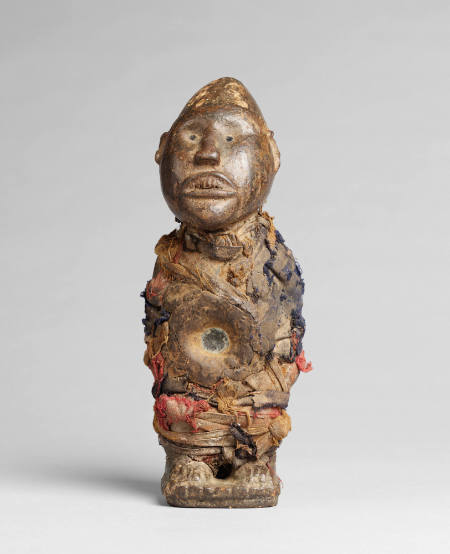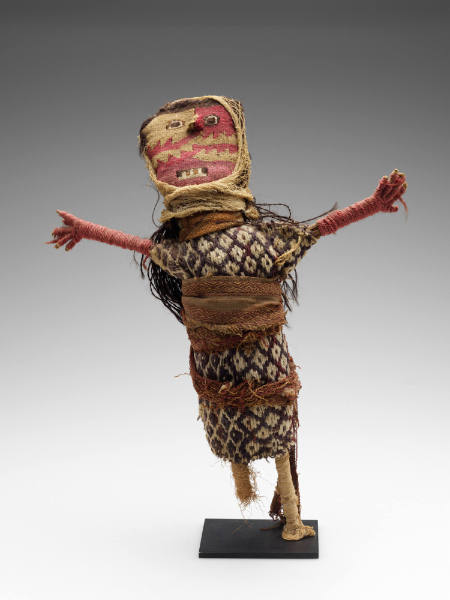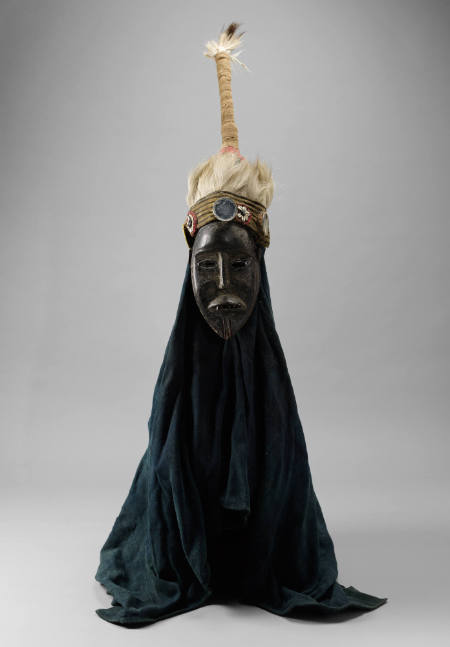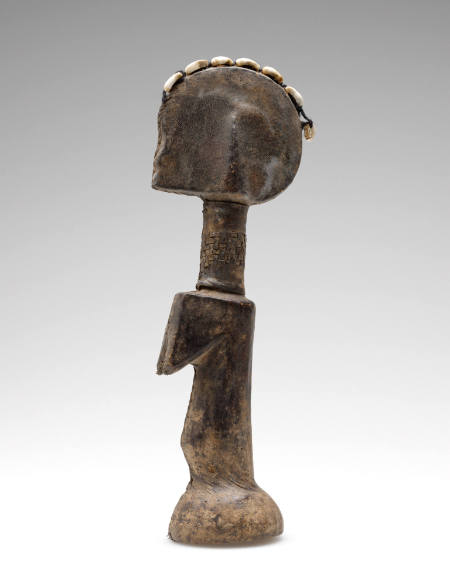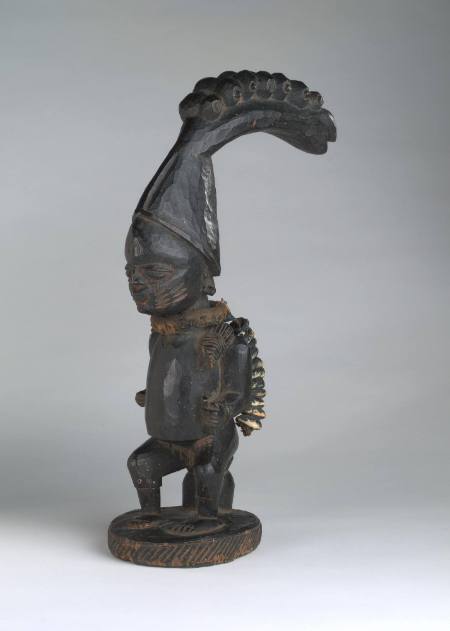

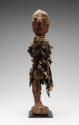
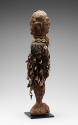
Janiform standing figure (Bocio)
Place Made DisplayWest Africa Dahomey
MediumWood, fiber, shells, and metal
DimensionsHeight: 21 1/2 inches (54.6 cm)
CultureBenin, Fon peoples
ClassificationsSculpture
Credit LineGift of William W. Brill
Terms
- Sculpture
- Fon
- and metal
- Power figures
Object number86.089.015
Label CopyBRIEF DESCRIPTION
This is a janiform (two-faced) wooden figure that was made to provide protection to its Fon owner.
WHERE WAS IT MADE?
The Fon live in West Africa, primarily in Benin, but also in southwestern Nigeria.
HOW WAS IT MADE?
This bocio was hand carved from a piece of wood with tools such as an adze, knives, and chisels. In order to have an active bocio, the owner commissions a plain, rough-hewn sculpture from a male carver sanctioned by a diviner. The owner then “activates” the unadorned sculpture with the addition of powerful materials such as shells, rope, fabric, and libations.
HOW WAS IT USED?
By acting as surrogates for their owners, bocio provide protection by decoying harm away from owners and by promoting good will in many forms: health, wealth, love, and even good weather. Bocio are often placed at Fon shrines within family compounds. To see examples of Fon altars within the Johnson Museum’s collection, search for object numbers 99.092.020, 2006.068.019, and 2007.089.001 in the keyword search box.
WHY DOES IT LOOK LIKE THIS?
Notice that the sculpture’s head has two faces; the more detailed face may represent the owner, and the other face may represent the harmful forces he wishes to avoid. It is also advantageous to have two sets of eyes, conveying omniscient powers on the figure, and increasing its protective abilities.
Collections