
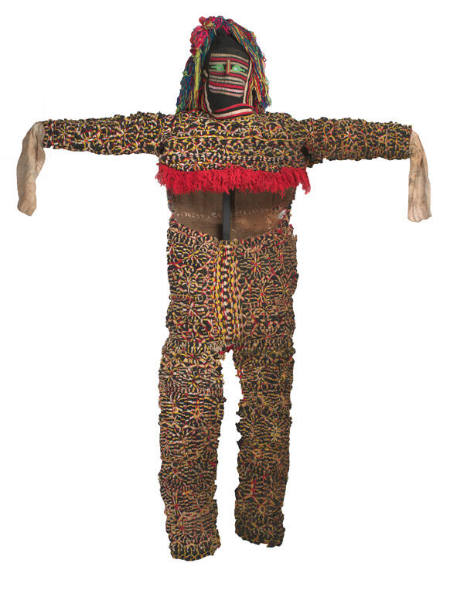
Mask (Deangle)
MediumWood, metal, cloth, cowrie shells, mirrors, and hair
DimensionsHeight: 36 inches (91.4 cm)
CultureDan
ClassificationsCostume
Credit LineGift of Dorothy Brill Robbins, Class of 1933
Terms
- Liberia
- Costume
- Dan
- and hair
- Ceremonial dancing
- Ceremonial objects
Object number89.016.007
Label CopyBRIEF DESCRIPTION
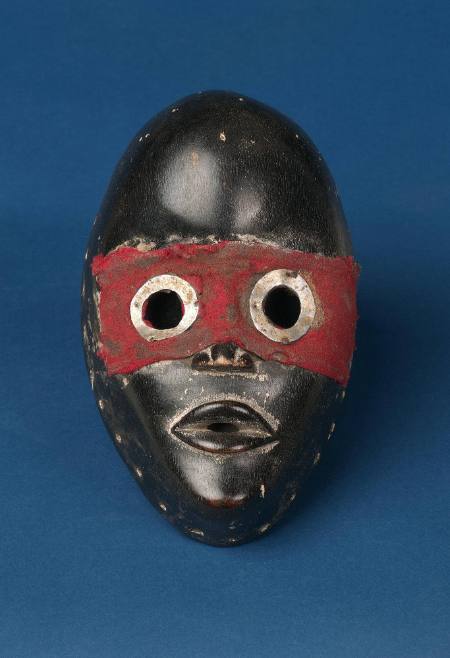
The deangle is a friendly joking or laughing Dan masquerade performed at the time of circumcision camp.
WHERE WAS IT MADE?
The Dan are an ethnic group of approximately 350,000 people who live in the West African countries of Liberia and the Ivory Coast.
HOW WAS IT MADE?
This mask was carved from wood. The artist begins by using an adze to make the initial form and then uses chisels and knives to finish and refine the mask. To see a Dan adze in the Johnson Museum’s collection, search for object number 86.015.006 a,b in the keyword search box.
The final form is smoothed with coarse leaves, then stained with plant sap. Thin strips of metal (likely tin) were attached, outlining the eyes.
HOW WAS IT USED?
The deangle is a friendly joking or laughing Dan masquerade performed at the time of circumcision camp. It does not perform to music, but moves gracefully between the secluded camp and women back at the village from whom the deangle solicits provisions for the men and boys away from home. Good-natured, but amusingly ignorant, the deangle sometimes teases the women by asking for inedible goods.
WHY DOES IT LOOK LIKE THIS?
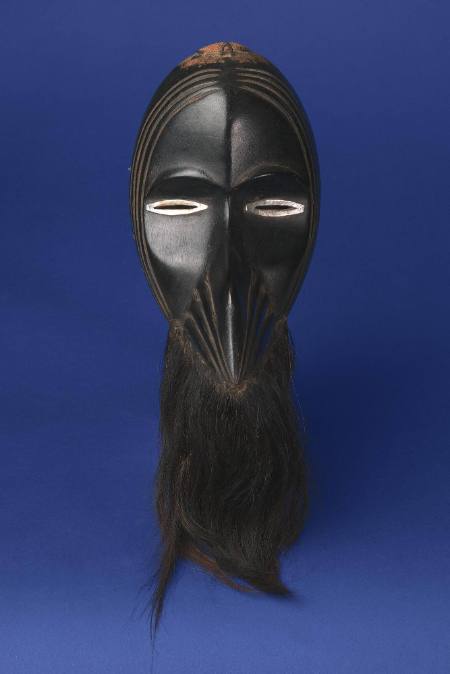
Dan masks generally feature physical characteristics of either sex: female elements include elliptical eyes and an oval shape, whereas male facial qualities include a more angular eye and face shape, and a large overall size. Despite these gendered differences, masks are not believed to be male or female, but understood as pa, or “things.”
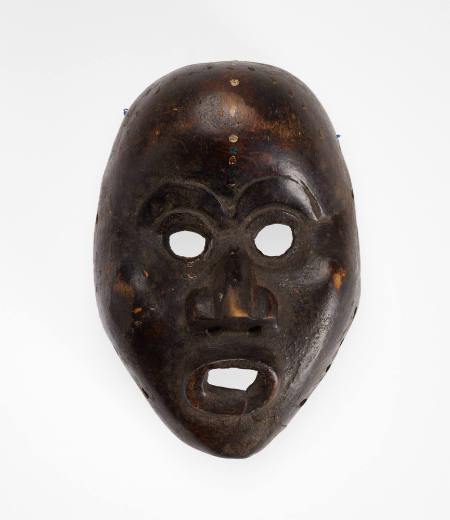
The exposed teeth of the deangle mask are not meant to suggest fearsomeness. Instead, it smiles, exposing teeth with large gaps considered aesthetically desirable by the Dan.
The conical extension that rises above the forehead of the mask is called a ke son, named after the fish trap that it resembles.
The heavy cloak is constructed from locally made fabric, dyed blue with indigo, a plant found throughout West Africa. When performed, a long, heavy grass skirt completes the deangle costume.
To see other Dan masks in the Johnson Museum’s collection, search for object numbers 82.114.001, 82.114.002, 89.016.010, 91.001.008, and 91.001.014 in the keyword search box.
Collections
20th Century