

Celestial glyph vessel
Place Made DisplaySoutheastern Salvador, Mexico
MediumCeramic
DimensionsHeight: 8 1/2 inches (21.6 cm);
Diameter: 8 inches (20.3 cm)
Diameter: 8 inches (20.3 cm)
CultureMaya (Mexico)
ClassificationsCeramics
Credit LineGift of the Dr. Sidney Tamarin, Class of 1930, Trust
Terms
- México
- Ceramics
- Maya
- Ceramic
Object number2000.096
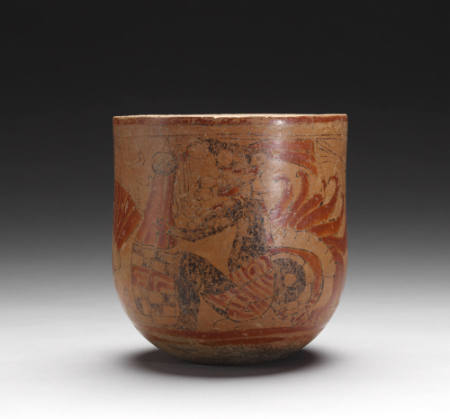
Label CopyBRIEF DESCRIPTION
This Mayan vessel features a celestial glyph repeated around the upper rim.
WHERE WAS IT MADE?
This vessel was made in Central America.
HOW WAS IT MADE?
This vessel was likely hand-built with the coil method. In this method, a base is made by shaping clay into a flat disc. Then hand-formed coils of clay, like ropes, are successively added to one another, building up the walls of the bowl. A tool such as a wooden paddle is used to smooth the sides both inside and out, leaving no trace of the coils.
Before the bowl was fired, it was painted with red, tan and black slip. Unlike resin-based paints applied after firing, which wash off if scrubbed and burn off when heated, slip-painted decoration is relatively resistant to ordinary wear and tear. Slip paint is made by mixing different-colored clays or ground mineral pigments with water. Although some colors are naturally present in the clay, others can be made by adding powdered minerals to clay; for example, minerals high in iron produce rich oranges and reds, while those containing various forms of copper produce blues and greens.
HOW WAS IT USED?
The function of pre-Columbian ceramic vessels is not easy to ascertain. Were these vessels made for the dead, fancy grave goods with specific religious or mythical imagery, or were they treasured possessions used in life? Or both? Although most pottery made in the past was functional ware used to cook, store, or serve foods, more elaborate pieces also conveyed social information. This vessel has a small, intentionally made hole on its shoulder, which may represent the ceremonial “killing” of the pot before interment with a deceased ancestor.
WHY DOES IT LOOK LIKE THIS?
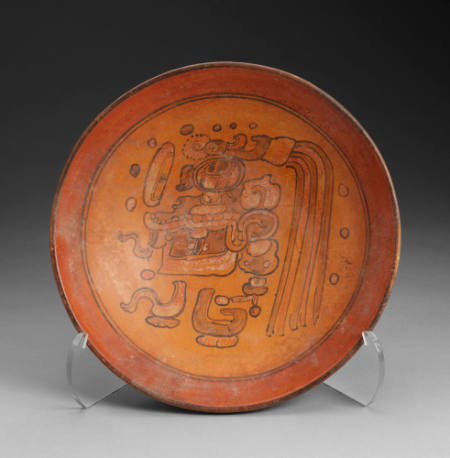
This is not a typical Maya vessel; it may be from the periphery of the Maya world. There are two repeats of the celestial glyph motif on the neckband. Glyphs, symbols representing words and syllables, are the foundation of the Mayan writing system. Many of the glyphs refer to astronomical cycles and patterns. These glyphs often appear on vessels and buildings. To see another Mayan object with glyphs in the Johnson Museum’s collection, search for object number 70.040 in the keyword search box.
ABOUT THE MAYA CULTURE:
The Maya civilization was one of the premier civilizations of Mesoamerica, achieving great masterpieces of art and architecture, a sophisticated calendrical system, and a formal system of writing that has only been deciphered in the past several decades. A much more detailed view is emerging of the Mayan city-states located in the Yucatan Peninsula of Mexico, Belize, and adjacent areas of Guatemala and Honduras. Although the exact details of the Maya collapse in the 800s are still controversial, it appears that excessive warfare and violence, coupled with environmental degradation and the stress of a large population, led to the demise of this once-vibrant culture. Populations crashed, with survivors of the urban centers dispersing to more rural areas.
Collections

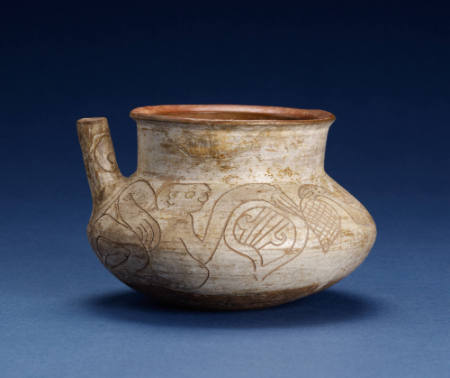
ca. AD 250–550
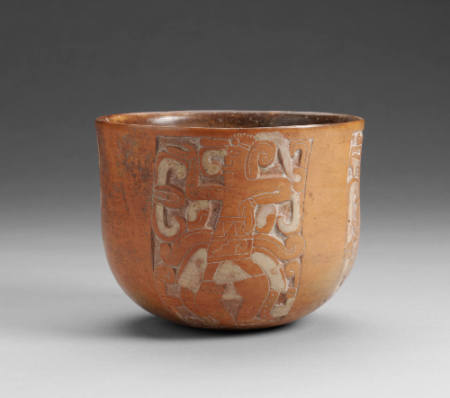
750–950 CE
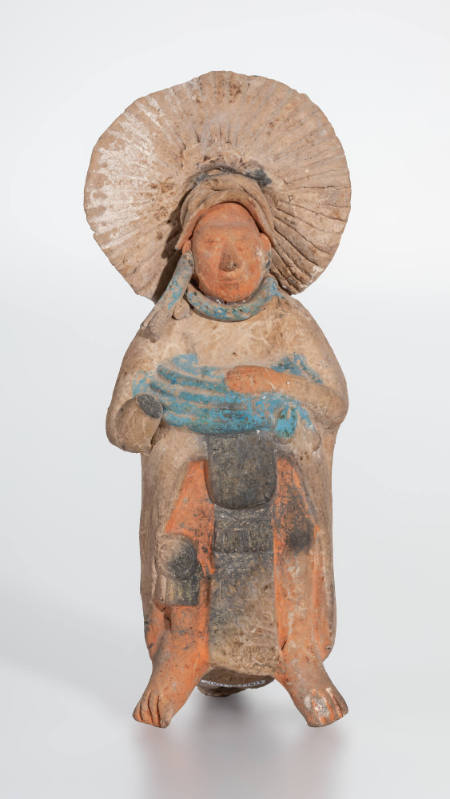
600–900 CE
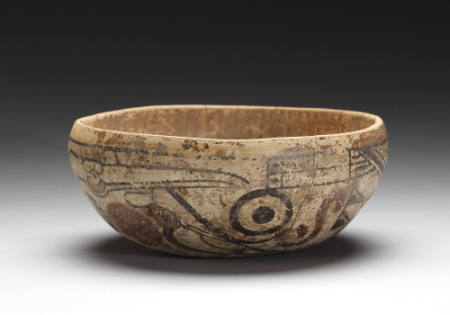
600–800 CE
ca. 300-900 A.D.
550–950 CE
A.D. 550-950
600–900 CE
550-950 AD
ca. 100-600 AD
ca. 1300-1470 AD