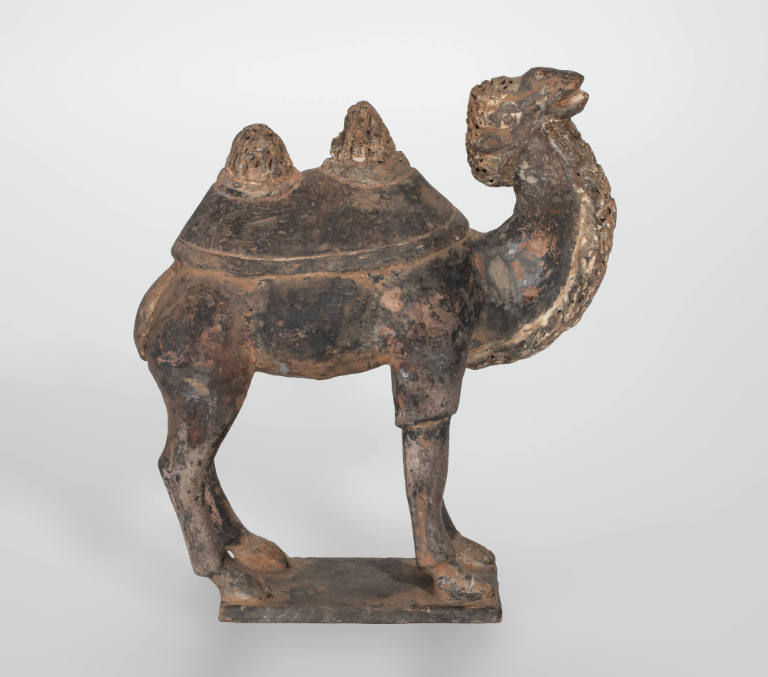
Bactrian Camel
Maker
Unidentified artist
DateNorthern Wei Dynasty (386-535)
MediumEarthenware with traces of slip and pigment
Dimensions9 1/4 x 8 inches (23.5 x 20.3 cm)
CultureChina
ClassificationsCeramics
Credit LineGeorge and Mary Rockwell Collection
Terms
- Ceramics
- Sculpture
- Earthenware
- Chinese
- Earthenware
- Pigments
- Slip
- Terra cotta with traces of pigment
- Animals
- Camels
Object number88.002.129
Label CopyThe Bactrian, or double-humped, camel was not native to China but was introduced by Turkic traders who first traveled the vast Central Asian desert during Roman times. The camel was to prove very valuable to the economic well-being of the Chinese, who came to prize its extraordinary ability to carry large and heavy loads across some of the most difficult terrain in the world. The importance they gave the camel is demonstrated by the frequency of its encounter among the tomb figurines of the fourth century and later.
The camels produced during the Northern Wei period are smaller and less flamboyant than their better-known glazed counterparts of the following Tang Dynasty, but they possess a stately grace and presence just as imposing. Especially noteworthy in this example is the careful detailing of the facial features, which combines with the delicate modelling of the neck to give the sculpture an understated but uncanny feeling of realism. Traces of slip and pigment suggest that at one time the surface had a much more colorful appearance than the sober grey clay conveys to us today. (From “A Handbook of the Collection: Herbert F. Johnson Museum of Art," 1998)
Collections
Unidentified artist
750–950 CE
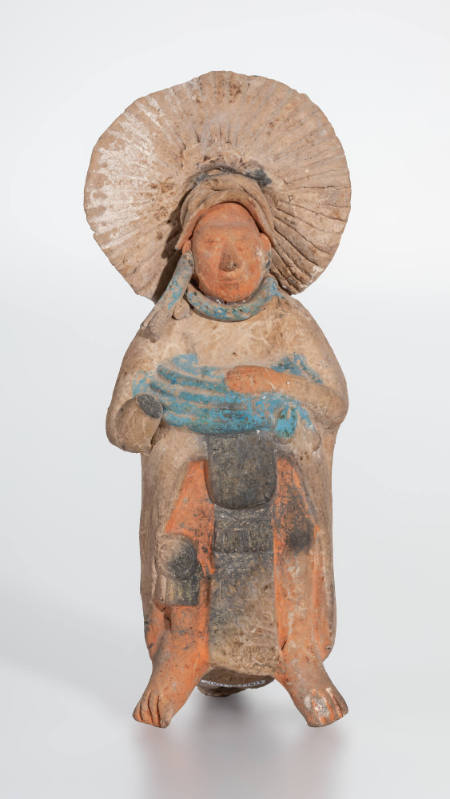
600–900 CE
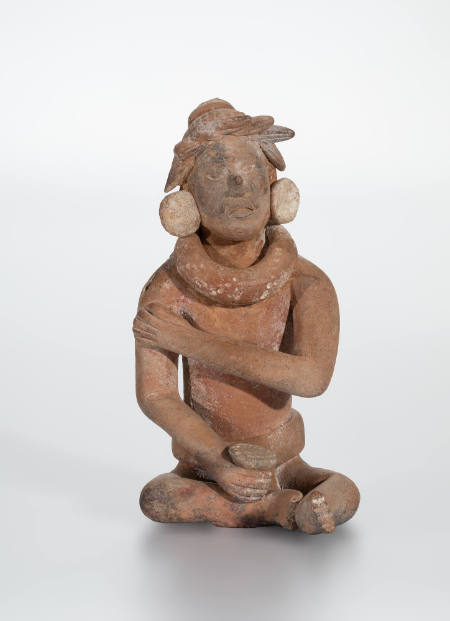
600–900 CE