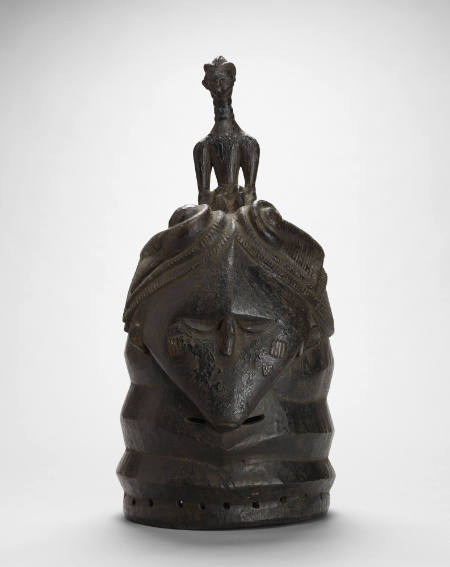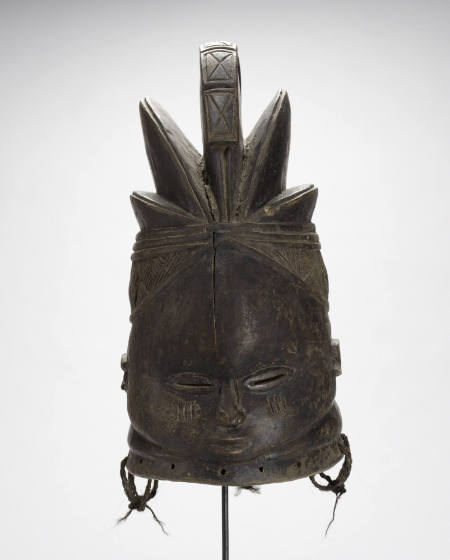

Crest mask representing an elephant (nkum nsüo)
MediumWood
DimensionsHeight: 33 inches (83.8 cm)
CultureWestern Cameroon Grasslands, Bali people
ClassificationsCostume
Credit LineGift of Norman Rifkin
Terms
- Costume
- Cameroonian
- Wood
- Elephants
Object number82.110.004
Label CopyBRIEF DESCRIPTION
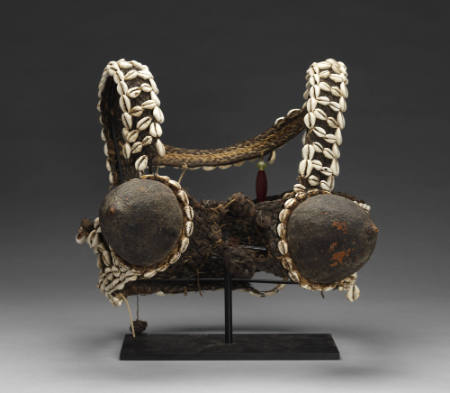
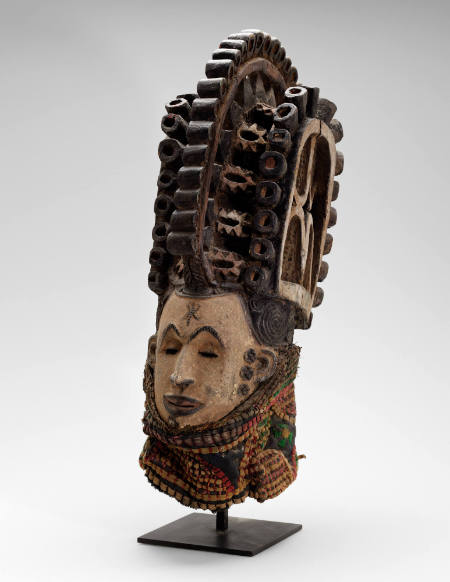
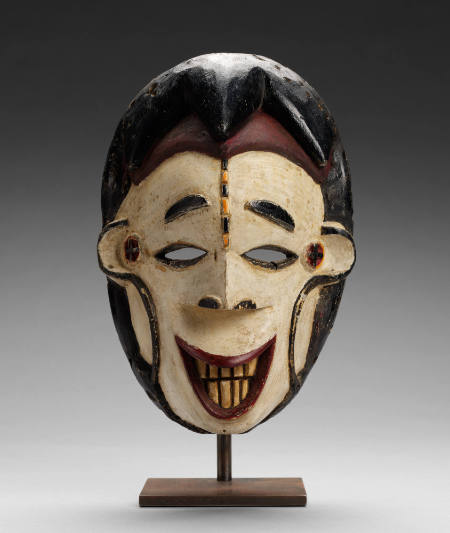
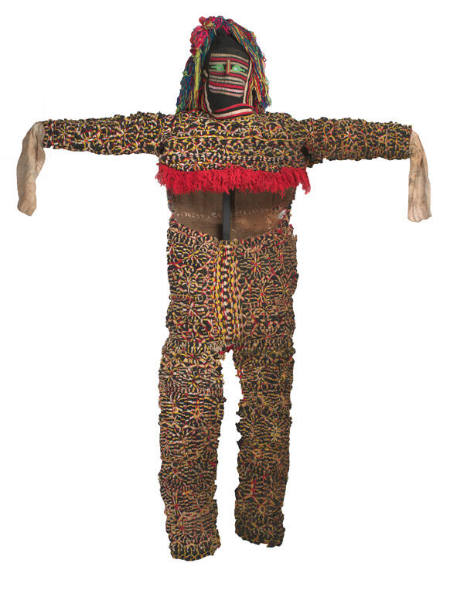
This elephant mask was performed along with other animal and human masks as part of special celebrations in Cameroon.
WHERE WAS IT MADE?
This mask comes from the Northwestern Grassfields, an area in Cameroon. There are many small kingdoms in this region of Cameroon who have maintained close ties. Trading, gifting, and stylistic borrowing of masks and figures can make it difficult to attribute an object to a particular kingdom.
HOW WAS IT MADE?
Beginning with a fresh wood block, artists in the Grassfields area of Cameroon use a variety of adzes, chisels, and hammers to carve masks and other figures.
HOW WAS IT USED?
This elephant mask is part of a larger ensemble of masks known as kum. The masquerade group consists of five to twenty-some masks depicting both people and animals, such as the buffalo, ram, chameleon, and “flying dog” or bat. Together, these masks form a group controlled by either an important lineage or a regulatory society called the Kwifoyn. The group of masks was likely produced by a single artist and danced on a single occasi82.110.001on, such as a funeral. The elephant appears last in the masquerade and, as the most prestigious animal, serves to protect the other characters from both people and “bad medicines.” Rather than cover the masquerader’s face, a crest mask sits on top of his head. A fitted woven raffia net, which allows the dancer to see without being seen, conceals the dancer’s face.
This and other masks performed in the kum masquerade were traditionally expressions of wealth and achievement; the right to perform, commission masks, and solicit performers, all required significant wealth and influence. The masquerade that features this and other masks is rarely performed today. Most masks have been sold or have decayed significantly.
WHY DOES IT LOOK LIKE THIS?
Elephants have been extinct in this part of Africa for a century; nevertheless, the metaphorical significance of the elephant is retained in the kum masquerade. Elephants have long been respected for their strength and sought for their valuable ivory tusks. These qualities are translated in the masquerade to represent political and economic power.
To see other masks from the Grassfields area of Cameroon within the Johnson Museum’s Collection, search for object numbers 73.025.004 and 82.079.004 in the keyword search box.
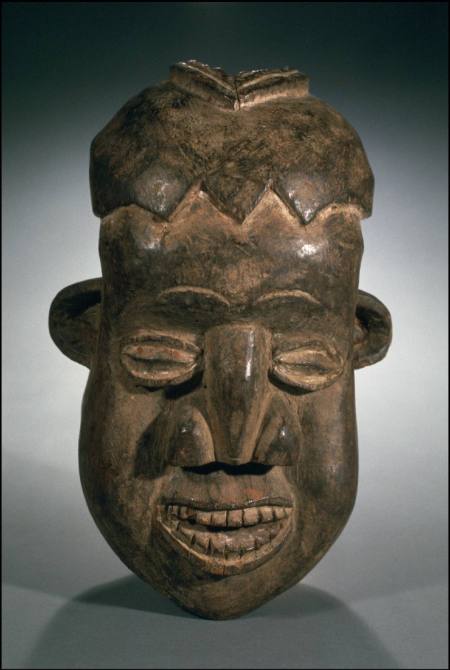
ca. 1900-1940
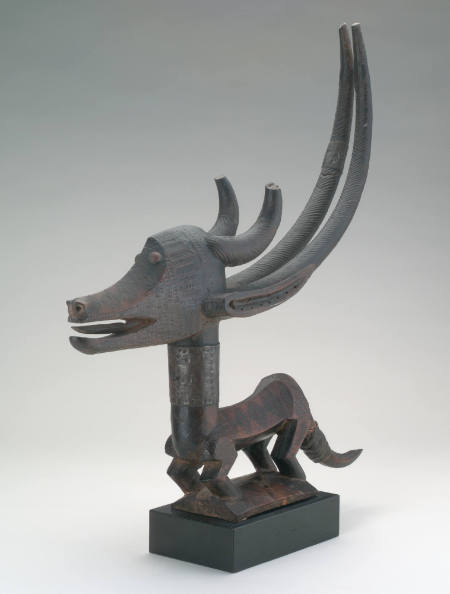
20th Century