
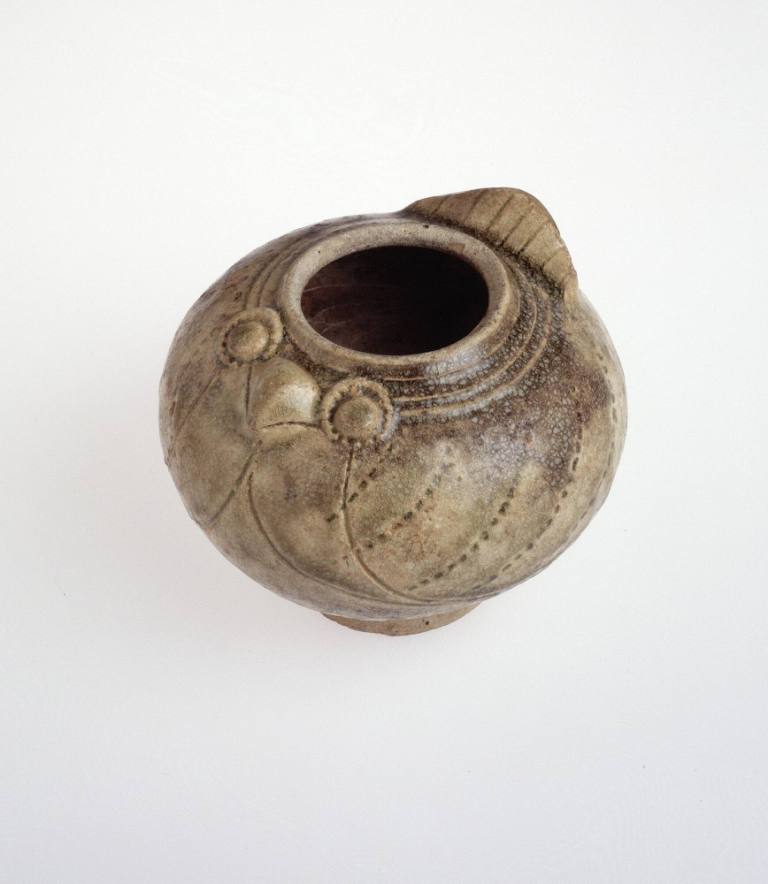
Globular jar; Limepot
Maker
Unidentified artist
Dateca. 13 century
MediumCeramic with greenish beige glaze
DimensionsHeight: 3 1/8 inches (7.9 cm)
CultureCambodia
ClassificationsCeramics
Credit LineGift of Dean F. Frasché
Terms
- Ceramics
- Cambodian
- Greenish beige glaze
- Animals
- Birds
- Owls
Object number69.121
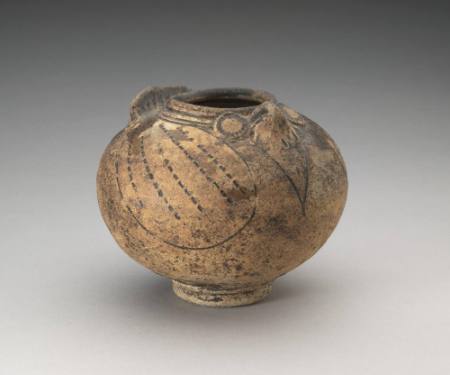
Label CopyKhmer potters commonly used whimsical zoomorphic and anthropomorphic jars and bottles as lime containers in the preparation of betel nut. The lustrous, rich brown glaze that covers the surface of this pot is also a common characteristic of wares dated to the Angkor period, (twelfth to thirteenth centuries). The brown glaze is the result of a high iron content. The shape of this pot has been likened to an owl, which is also a common shape in Khmer wares, as the owl is a familiar inhabitant of Southeast Asia and tends to reside near temple compounds. Bird shapes in ceramics, statuary, or architectural motifs in general have been equated with celestial beings because of their ability to fly. They are seen as intermediaries between the earth and the heavenly realms or as messengers to the gods. (From “A Handbook of the Collection: Herbert F. Johnson Museum of Art," 1998)Collections





Unidentified artist


Unidentified artist