
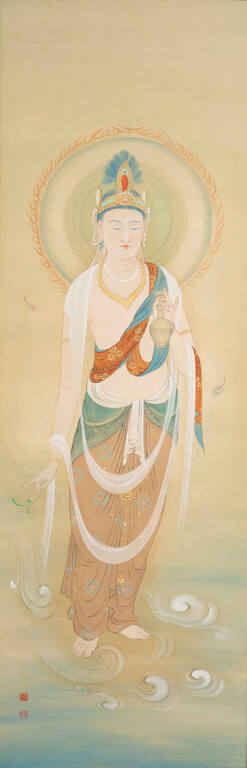
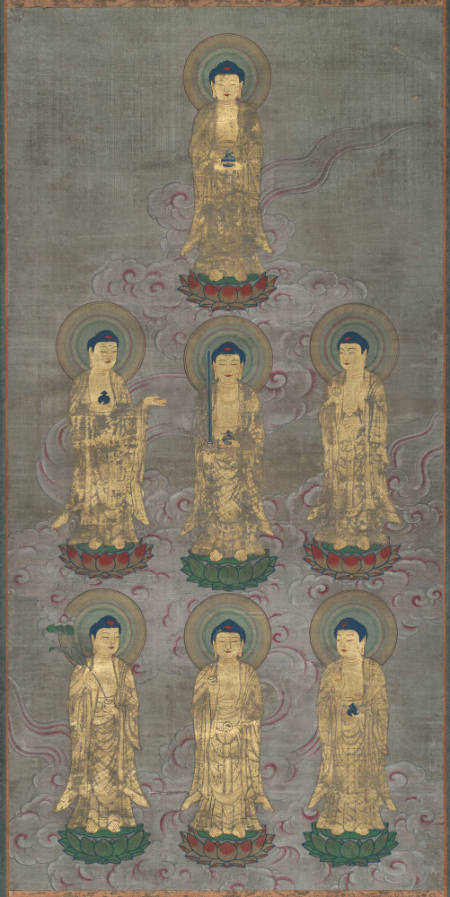
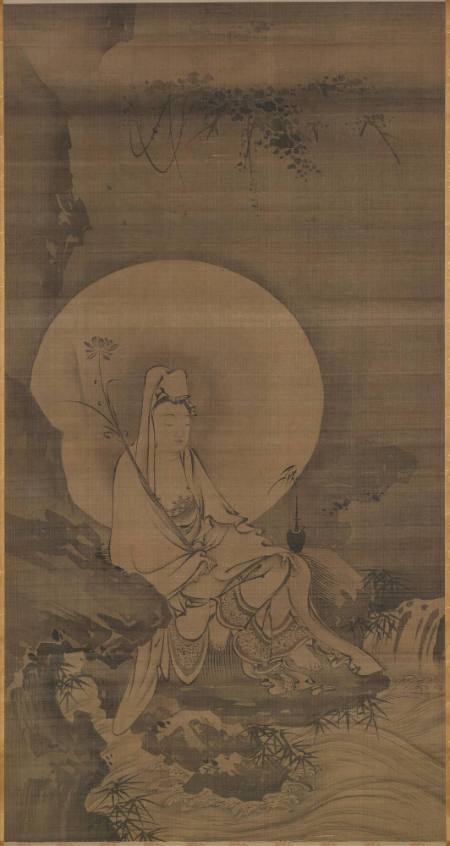
Kannon
Maker
Unidentified artist
MediumHanging scroll: ink and colors on silk
Dimensions27 1/2 x 14 1/4 inches (69.9 x 36.2 cm)
CultureJapan
PeriodKamakura period (1185–1392)
ClassificationsPaintings
Credit LineGift of Norbert Schimmel
Terms
- Paintings
- Japanese
- Hanging scroll: ink and colors
- Amitabha
- Avalokiteshvara
- Avalokitesvara
- Bodhisattvas
- Bracelets
- Buddhism
- Crowns
- Flames
- Gestures
- Gods
- Guanyin
- Haloes
- Headdresses
- Headgear
- Icons
- Jewelry
- Kannon
- Kuan-yin
- Lotus flowers
- Lotus petals
- Mandorlas
- Necklaces
- Religion
- Scarves
- Silk
Object number55.087
Label CopyPaintings serve important roles in conveying the secret teachings of Shingon Esoteric Buddhism and are at the heart of many of its rituals. According to the writings of the Shingon sect's founder, Kobo Daishi, "In truth, the esoteric doctrines are so profound as to defy their enunciation in writing. With the help of painting, however, their obscurities may be understood. Art is what reveals to us the state of perfection."An image of Kokuzo Bodhisattva, whose name means "the one whose storehouse of wisdom is as vast as space," is central to performing the Kokuzo Gumonji Ho, a secret ritual in which the mantra of this bodhisattva is chanted a million times for fifty or a hundred days. Completion of this ritual is believed to grant the power of remembering all teachings and things heard and seen.
Kokuzo Bodhisattva sits in meditation upon a lotus blossom, with the right hand in the wish-granting gesture and the left hand holding a white lotus that supports a flaming cintamani, or wish-granting jewel. The bodhisattva's crown bears seated images of the Five Wisdom Buddhas.
Collections
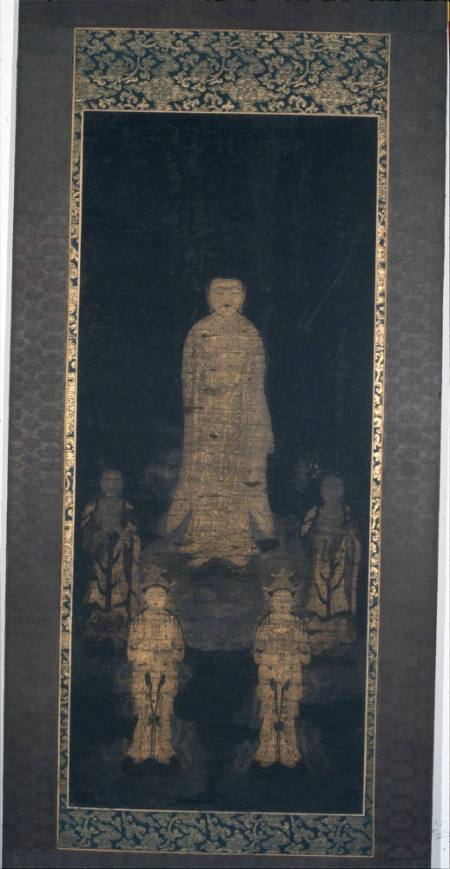
Kamakura period, late 12th or early 13th century

Hoji, Tanaka
Unidentified artist