
Mahakala
Maker
Unidentified artist
Datelate 18th or 19th century
MediumThangka: opaque watercolors and gold on cloth
Dimensions23 1/2 x 16 inches (59.7 x 40.6 cm)
CultureTibet
ClassificationsPaintings
Credit LineMuseum Purchase Fund
Terms
- Paintings
- Tibetan
- Gouache
- Cloth
Object number62.3345
Label CopyThis painting is an example of a mystical black tangka. Black symbolizes the ultimate reality, voidness, which is the permanent awareness or Truth Body (dharmakaya) of enlightened beings. Mahakala has numerous manifestations: here the Great Black One is shown with six arms, the two front hands holding a vajra chopper and skull bowl, the middle hands holding a drum in the right, a lasso in the left, and the upper hands holding the feet of a flayed elephant skin. Such ferocious deities are moved by compassion to employ their gruesome powers for the protection of Buddhist practitioners and to eradicate obstructions to enlightenment.
Surrounding Mahakala are numerous deities and beings. At the top left Sakyamuni, the historical Buddha, is seated in meditation; in the center Tsong Khapa, founder of the Geluk order, wears his distinctive yellow hat; at top right is another manifestation of Mahakala, as Protector of Science. Along the right side of the painting Penden Lhamo rides a wild ass, Dugon Trakshad rides a black horse, and the wealth god Kubera is shown seated with his jewel-spitting mongoose at his knee. Below Mahakala is Kshetrapala on a bear and the red-skinned Hayagriva, a fierce form of Avalokitesvara. Along the left side are the ogres Takkiraja, holding a skull drum, and the brown-skinned Jinamitra.
Collections
Unidentified artist
Unidentified artist
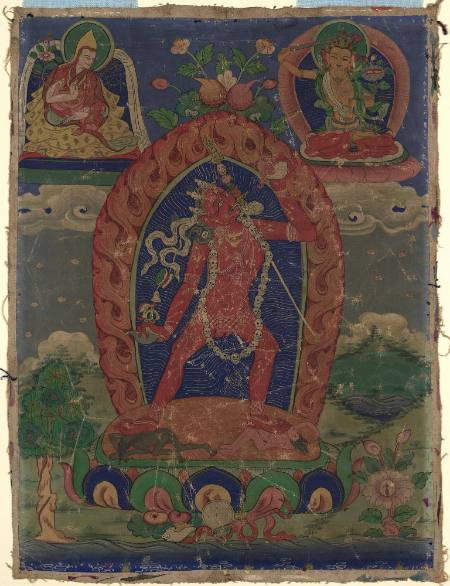
Unidentified artist

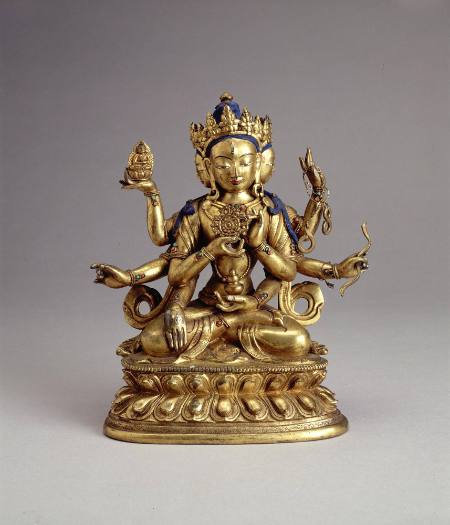

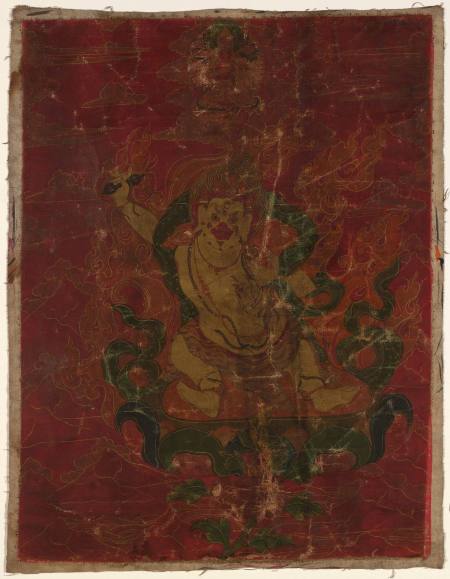
Unidentified artist
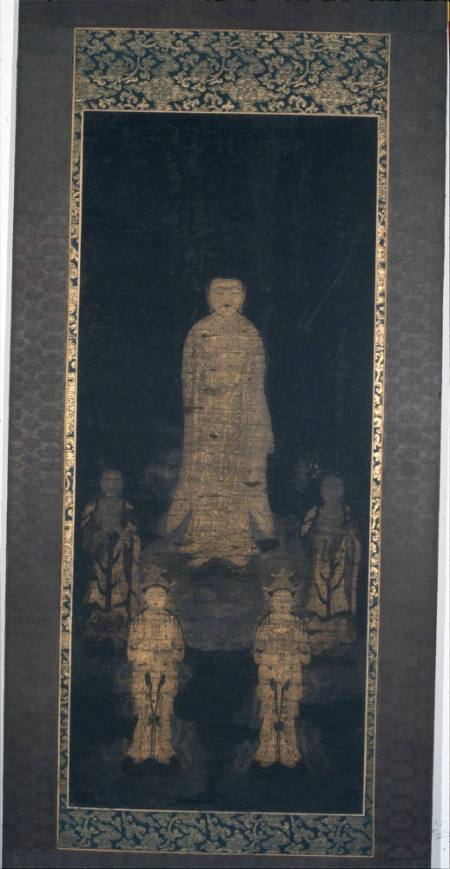
Kamakura period, late 12th or early 13th century
ca. 300 B.C. - A.D. 500