
Plate, Imari ware
Maker
Unidentified artist
Date17th century
MediumPorcelain with underglaze blue, overglaze red, green enamels, and gold
DimensionsHeight: 2 1/16 inches (5.2 cm);
Diameter: 15 7/8 inches (40.3 cm)
Diameter: 15 7/8 inches (40.3 cm)
CultureJapan
PeriodEdo period
ClassificationsCeramics
Credit LineBequest of Louis Livingston Seaman, Class of 1872
Terms
- Ceramics
- Vessels - Plates
- Porcelain
- Underglaze blue
- Animals
- Bamboo
- Birds
- Geometric patterns
- Gourds
- Leaves
- Manchurian cranes
- Plant-derived motifs
- Plants
- Plum trees
- Tortoises
Object number62.2645
Label CopyAmong the earliest students to attend Cornell, Louis Livingston Seaman (1851–1932) served as a military surgeon during the Spanish-American war, the Boxer Rebellion, the Boer War, and World War I. He accompanied the Japanese army in Manchuria during the Russo-Japanese war, an experience he wrote about in two books: From Tokio through Manchuria with the Japanese, published in 1905; and The Real Triumph of Japan: The Conquest of the Silent Foe, published in 1908. Seaman observed that more soldiers died from preventable diseases than from action on the battlefield, and he became an advocate for improved rations and sanitation in the US military, modeled on Japanese practices of hygiene and care for the sick and wounded.
Seaman’s extensive travels in Asia inspired his collecting of Chinese and Japanese ceramics. The decoration on this Imari ware plate combines many auspicious symbols, including bottle-gourds, traditionally used as containers for medicine, along with emblems of longevity such as the crane and long-tailed tortoise. ("American Sojourns and the Collecting of Japanese Art," curated by Ellen Avril and presented at the Johnson Museum June 25–December 18, 2016)
Collections
Unidentified artist
Unidentified artist
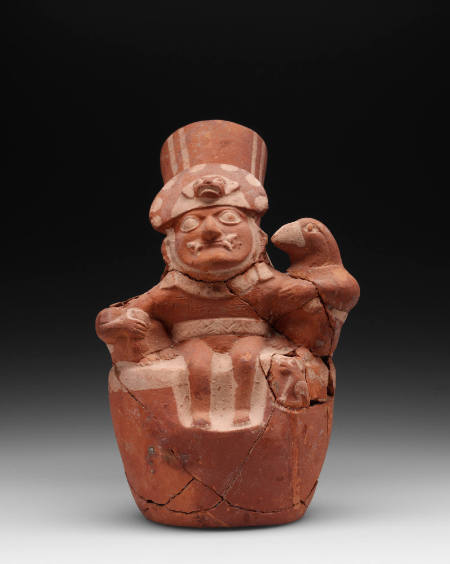
ca. 100-700 AD
Unidentified artist
Unidentified artist
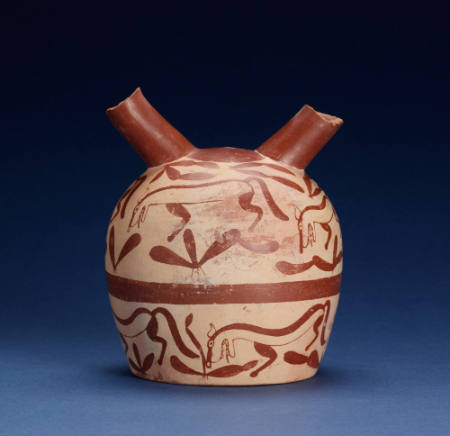
ca. 100-750 AD

Unidentified artist
100 AD- 600AD

Unidentified artist