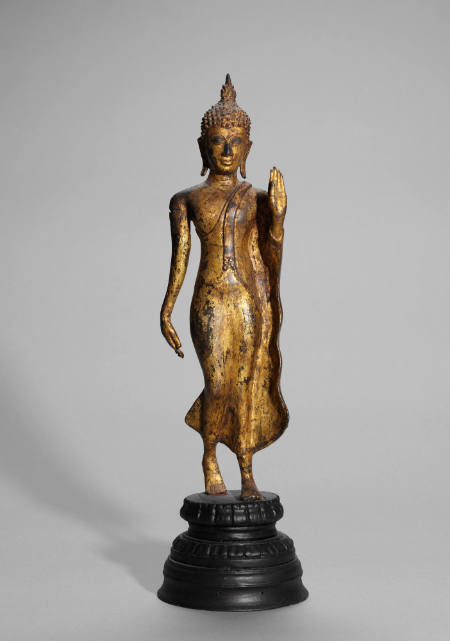

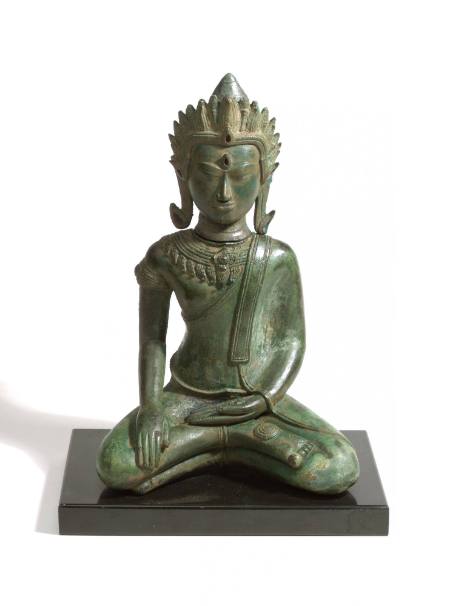
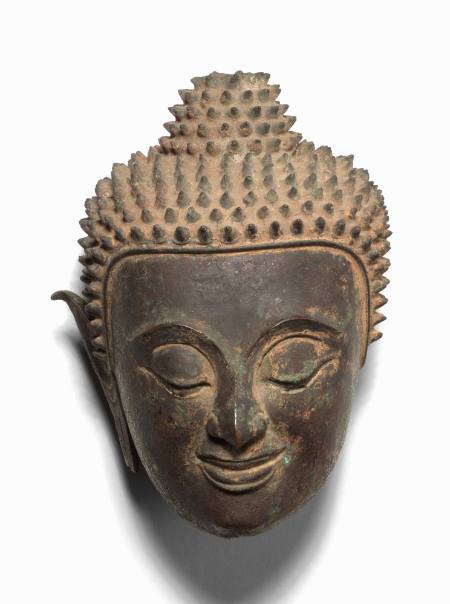
Standing Buddha in Royal Attire
Maker
Unidentified artist
Date15th-16th century; Ayudhya Period
MediumBronze
DimensionsHeight: 29 1/2 inches (74.9 cm)
CultureThai
ClassificationsSculpture
Credit LineGift of Alexander B. Griswold
Terms
- Sculpture
- Thai
- Bronze
- Buddha
- Buddhism
- Crowns
- Finials
- Gestures
- Headdresses
- Hinayana
- Jewelry - Bracelets
- Jewelry - Necklaces
- Jewelry - Pendants
- Religion
- Robes
- Theravada
Object number75.071.002
Label CopyA popular Thai term for the Buddha wearing a crown is Phra Chao Song Khruang, “a lord wearing ornaments.” While standard depictions of the Buddha tend to show him without adornment, signifying his renunciation of material wealth and earthly desires, crowned images of the Buddha became popular in the twelfth and thirteenth centuries throughout Southeast Asia. One explanation for this change is linked to the iconography of the bodhisattva Maitreya, worshipped both as the Buddha of the next age, and as a transcendent bodhisattva, a divine being who has chosen to remain on earth to help others attain enlightenment. The adorned Buddha may thus be linked to representations of bodhisattvas in early Indian Buddhist art, in which they are commonly depicted as regal bejeweled figures.Collections
Unidentified artist