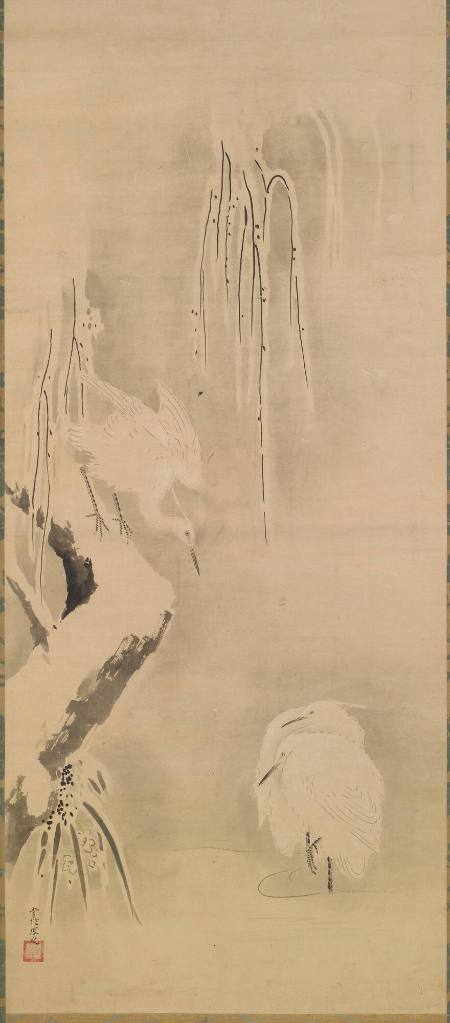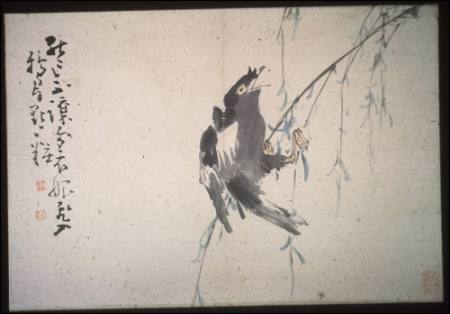

Cicadas and Willow
Artist
Li Shan
(Chinese, 1686–ca. 1760)
Date18th century
MediumHanging scroll: ink on paper
Dimensions42 3/8 × 18 5/8 inches (107.6 × 47.3 cm)
ClassificationsPaintings
Credit LineGift of Annie Wong, Class of 1977, and Calvin Cheng, Class of 1974, MBA 1976
Terms
- Scroll
- Hanging scroll: ink
- Cicadas
- Insects
- Trees
- Willows
- Calligraphy
- Inscriptions
- Paper
Object number2001.009
Label CopyInscribed with a poem:
Chasing the east wind to dancing parties;
Joyfully swinging on the grassy plain, even on sad days.
Why is it that when cool autumn days arrive,
Their leaves fall, taking with them the setting sun and cicadas?
A prominent member of the group of artists known as the Yangzhou Eccentrics, Li Shan came from a family of scholars and officials. He passed the second-degree examination at the age of twenty-five, but was later dismissed from service in the Imperial Study. He then worked in Yangzhou as a professional artist. After a second try at officialdom, he was dismissed from his position as magistrate of Linzhi, in Shandong Province, and returned to Yangzhou. For the rest of his life, he gained a reputation for painting and for his unconventional lifestyle.
Li Shan excelled at painting literati subject matter such as ink bamboo, orchids, and other botanical motifs, birds and insects, in a free, expressive manner. The cicada is a symbol of immortality. Willow represents spring and is believed to possess power to overcome demons.Collections