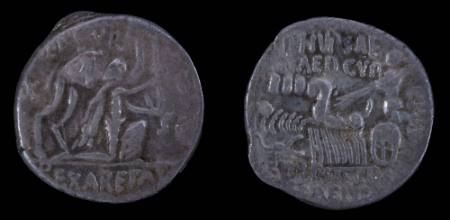
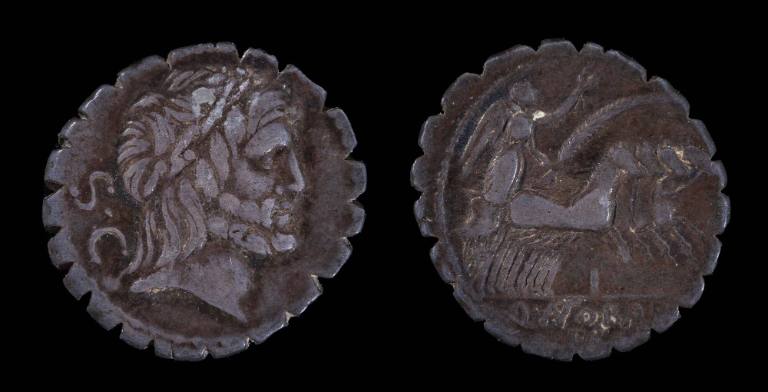
Moneyer Q ANTO (nius) BALB (us) PR
Date83–82 BCE
MediumSilver
DimensionsDiameter: 3/4 inches (1.9 cm)
CultureRoman
ClassificationsMetalwork
Credit LineGift of Mark M. and Lottie Salton
Terms
- Metalwork
- Coin
- Roman
- Silver
- Gods
- Horses
- Chariots
- Palm fronds
Object number2000.175.071
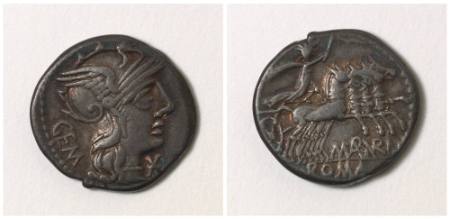
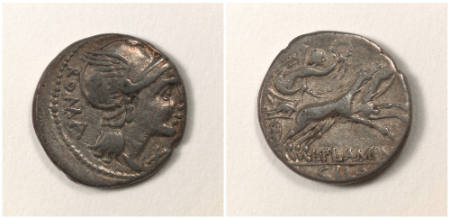
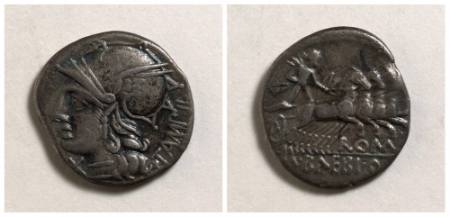
Label CopyAlthough scholars disagree about the purpose of these serrated denarii, some think they may have been made to discourage counterfeiting. However, since silver-plated serrated denarii have also been found from the Roman world, it appears that this strategy was not entirely successful if it was indeed intended as an anti-counterfeiting measure. Regardless, a similar serrated pattern can be found today around the edges of modern US quarters, dimes, and half-dollars. Before 1965, these three coin types all contained 90% silver and the serrated edge, called “reeding,” made the coins harder to counterfeit and discouraged people from shaving precious silver from the sides of these coins. (Olivia Graves, PhD student, “Wonder and Wakefulness: The Nature of Pliny the Elder,” exhibition organized by the Herbert F. Johnson Museum of Art, curated by Andrew C. Weislogel and Verity J. Platt, presented at the Johnson Museum January 21–June 11, 2023)
Collections


115–114 BCE