

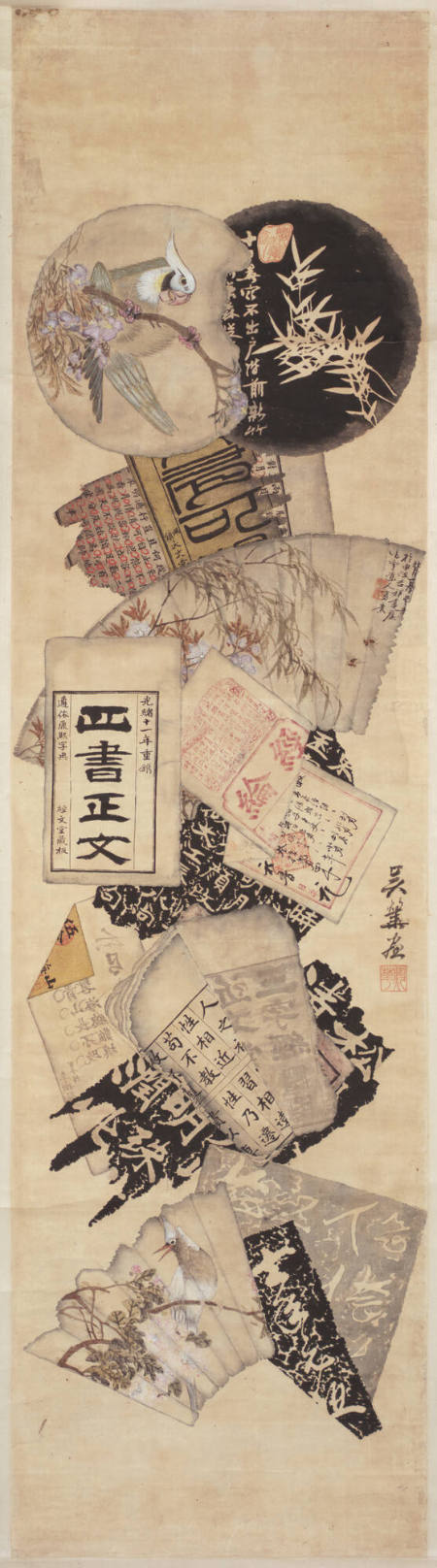
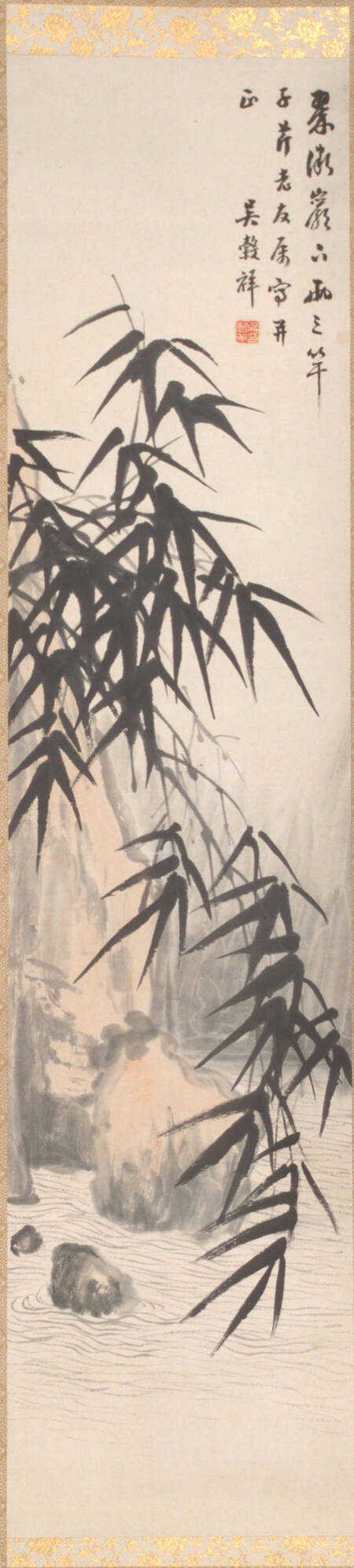
One of a pair of bapo ("Eight Brokens") paintings
Artist
Wu Zhuohua
(Chinese, 1873–1941)
Datelate 19th or early 20th century
MediumHanging scroll: ink and colors on paper
DimensionsImage: 57 7/8 × 15 5/8 inches (147 × 39.7 cm);
Mount: 66 15/16 × 17 5/16 inches (170 × 44 cm)
Mount: 66 15/16 × 17 5/16 inches (170 × 44 cm)
ClassificationsPaintings
Credit LineAcquired through the Membership Purchase Fund
Terms
- Paintings
- Hanging scroll: ink and colors
- Paper
Object number84.077.001 b
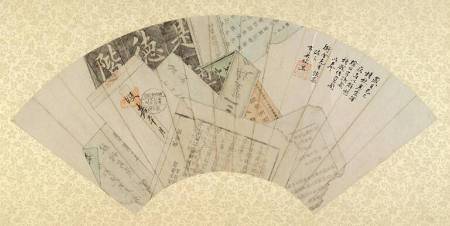
Label CopyDamaged remnants of paintings, fans, prints, pages of books, and rubbings of famous calligraphies were realistically painted here to seem like a collage of overlapped and randomly pasted fragments. This illusionistic genre, called bapo (or “eight brokens”), became popular in the late-nineteenth and early-twentieth centuries. Bapo images are meant to evoke reminiscence for and appreciation of the past (huigu). Some bapo also include hidden meanings of good fortunes, as eight is an auspicious number in Chinese culture. Pasting cherished calligraphies, ink rubbings, and paintings to a surface such as a screen is an artistic tradition existing as early as the Tang dynasty, known as bogu (“plentiful ancient objects”). Bapo is believed to have evolved from bogu.Collections
Fu Qing
Ming dynasty, early 17th century