


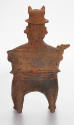
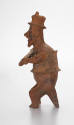
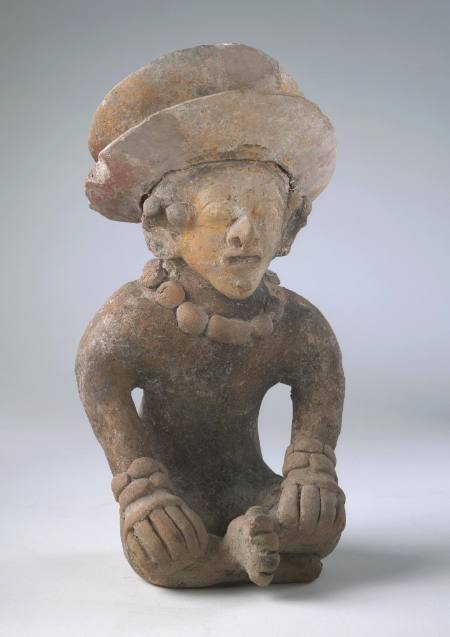
Seated male warrior figure with club
Date300 BCE–300 CE
MediumCeramic
Dimensions11 1/2 × 6 × 5 inches (29.2 × 15.2 × 12.7 cm)
CultureNayarit (Mexico)
PeriodProtoclassic
ClassificationsCeramics
Credit LineGift of Noyes Huston, Class of 1932, and Margaret Huston
Terms
- México
- Ceramics
- Nayarit
- Ceramic
- Hats
- Tattoos
- Weapons
- Earrings
- Necklaces
- Nose rings
- Headdresses
- Headgear
Object number89.020.001
Label CopyBRIEF DESCRIPTION
This is a ceramic Nayarit figure of a warrior holding a baton.
WHERE WAS IT MADE?
This figure was made in the western region of what is now Mexico.
HOW WAS IT MADE?
This figure was made with a combination of hand-building techniques, including coiling and hand modeling. A sharp stylus was used to add the incised lines to the figure’s tunic. The figure was fired in an earthen pit to harden it.
HOW WAS IT USED?
The original function of archaeological figurines found in museum collections is uncertain. Today archeologists carefully record information about the associations between artifacts and the circumstances of their burial as they are unearthed, and we can draw many conclusions about object function. However, very few of the archaeological objects found in museums today were excavated in a careful, scientific manner, so we have fewer clues about their past associations and function.
A wide range of people and objects are shown in pre-Columbian pottery. From burials, we know that the variety of jewelry and clothing styles reflect the actual appearance of many of these prehistoric people. Because figurines represent many life stages and ordinary human activities, they likely served to exemplify the usual norms of behavior, to serve as guidelines or rules to help socialize people and integrate them into society. Although obviously decorative, figurines could also have been used to make offerings to supernatural powers, to serve as good luck charms, or to accompany the dead as grave goods.
Most pre-Columbian objects from this region of Western Mexico were found in shaft tombs. Ranging up to 6 meters in depth, these tombs consist of a chamber leading from a narrow vertical hole or shaft. Because these chambers were used to bury many people over long periods of time, it is likely that they were maintained and used by family groups. West Mexican shaft tombs range in date from the Early Formative to the Early Classic periods (1800-0 BC), but most date to the Late Formative (500-0 BC). Tombs may contain hundreds of figures; among them, paired sets of matching male and female figures, perhaps representing married couples, are common.
WHY DOES IT LOOK LIKE THIS?
Nayarit figures are noted for the unusual proportions of their limbs, which are typically foreshortened and stubby, making the figures’ heads appear disproportionately large.
When viewed from the side, it becomes clear that this warrior figure is seated on a footed bench. This indicates that he depicts someone of high status; seats on benches were reserved for high-status males. Notice how he is also holding a baton or club-like weapon in both hands. This may be a kind of scepter, also symbolizing power and prestige. He is wearing an unusual brimmed hat with two projections resembling horns or ears rising from the top front edge and a tunic with flanges at the shoulder and waist.
Both the hat and the tunic are decorated with incised diamond pane crosshatching. Traces of black paint remain on the figure, indicating that the figure was originally depicted wearing black shorts ending above the knee and had black lines on the face representing face-painting or tattoos. The figure also wears a crescent-shaped nose ring and earrings.
Collections
100 BC–250 CE
250 BCE–450 CE
1000–1400
ca. 100-600 AD
AD 1200-1470


ca. A.D. 1-600

Unidentified artist
late 19th-early 20th century