
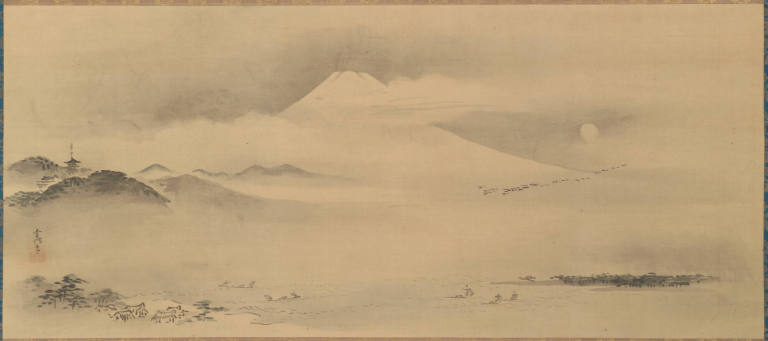
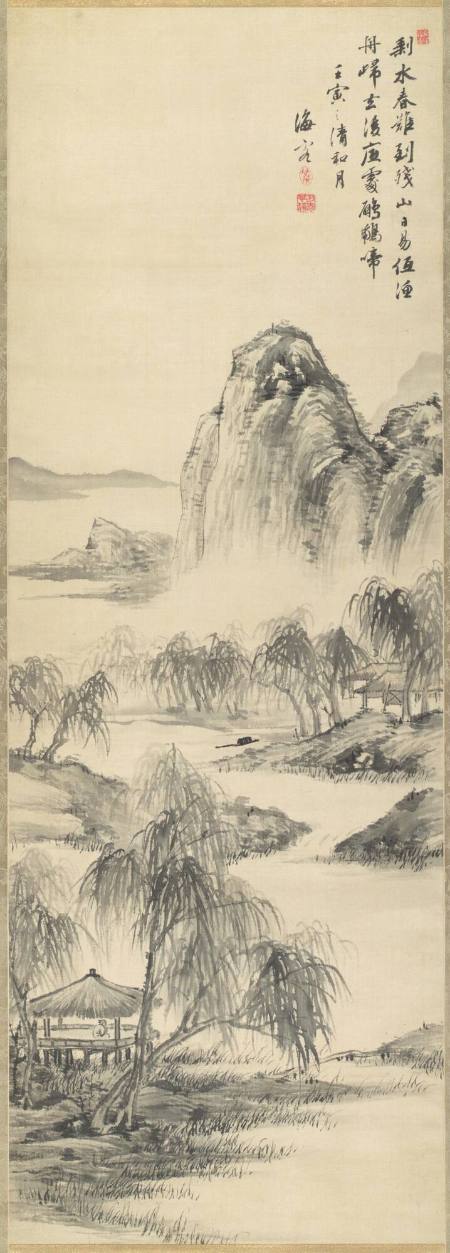
Mount Fuji at Night
Maker
Unidentified artist
MediumScroll
CultureJapanese
ClassificationsPaintings
Credit LineGeorge and Mary Rockwell Collection
Terms
- Paintings
- Japanese
- Animals
- Birds
- Boats
- Bodies of water
- Clouds
- Geese
- Huts
- Lakes
- Moon
- Mount Fuji, Honshu, Japan
- Mountains
- Night
- Pagodas
- Transportation
Object number88.002.197
Label CopyThe Kano lineage of painters was among Japan's most long-lived schools, remaining a conservative force in Japanese painting for some four hundred years. Their monochrome ink landscapes, ultimately modeled on the misty, idealized Chinese Southern Song painting tradition, remained popular among aristocratic and temple patrons for large-scale screens, as well as more intimate works, such as these scrolls, made for private quarters.
Kano Tsunenobu, nephew of the pivotal early Edo-period master Kano Tanyu (1602-1674), followed the traditional formula in his compositional approach by confining the dense landscape elements into one corner of the painting, and counterbalancing this with seemingly unending watery and misty expanses. Admired for his deft brushwork, Tsunenobu employed the wet, ink outlines, axe-cut textural strokes, and delicate washes that characterize the lyrical Kano style.
Collections
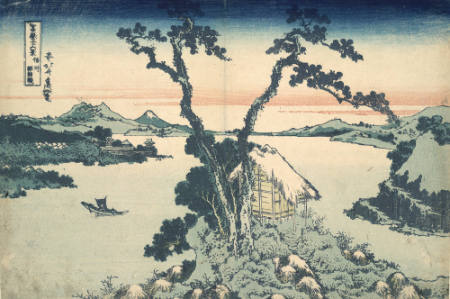
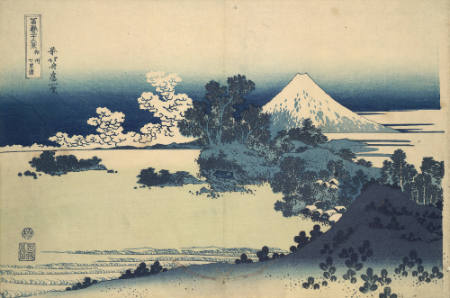
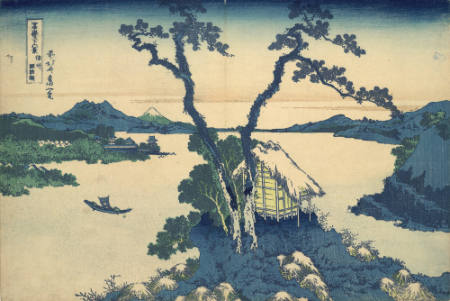
Katsushika Hokusai
ca. 1830–35
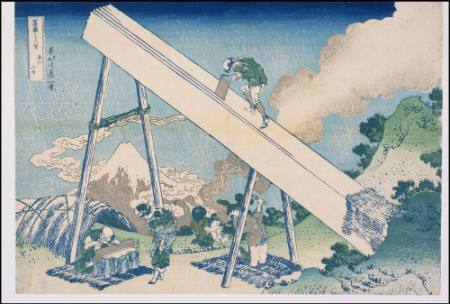
Katsushika Hokusai
late 18th–early 19th century
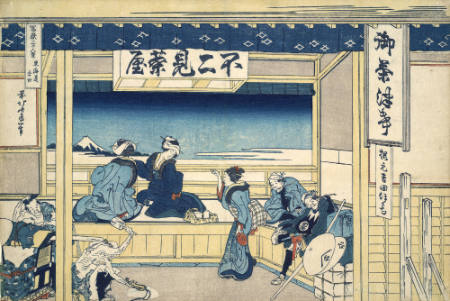
Katsushika Hokusai
late 18th–early 19th century
Liu Shaohua
Utagawa Hiroshige

Unidentified artist
Ch'ing Dynasty (1644-1911); Qing Dynasty (1644-1911)