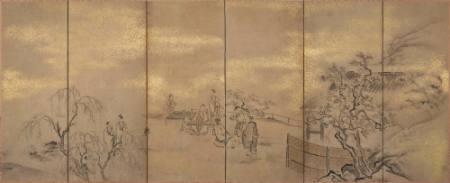

Celebrating the Rice Harvest
Maker
Unidentified artist
Date18th century
MediumSix-fold screen: ink, colors, and gold leaf on paper
Dimensions65 3/8 x 150 inches (166.1 x 381 cm)
CultureJapan
PeriodEdo period
ClassificationsPaintings
Credit LineGift of Robert J. Smith, PhD 1953, and Kazuko Smith
Terms
- Decorative Arts
- Screen
- Japanese
- Six-fold screen: ink, color, and gold leaf
- Animals
- Autumn
- Bodies of water
- Books
- Bridges
- Clouds
- Cows
- Dance
- Dancers
- Dancing
- Decks
- Deer
- Domestic interiors
- Drums
- Drumsticks
- Dwellings
- Hills
- Kimonos
- Lower class
- Maple trees
- Mountain ranges
- Music
- Oxen
- Pine trees
- Porches
- Robes
- Screens
- Scythes
- Seasons
- Servants
- Thatched roofs
- Tools
- Upper class
- Walking sticks
- Waterfalls
- Paper
Object number76.062
Label CopyThis screen shows a group of peasants dancing in the rice fields as the harvest is completed and a glimpse of an aristocratic household in the background. Such subject matter comes out of Chinese Confucian moral traditions to remind wealthy patrons that they are dependent on the work done by farmers and laborers. In Japan, such scenes are also appreciated for their seasonal significance. This screen might originally have been the left of a pair; the right screen perhaps showed scenes of rice planting in spring.
Screens functioned in aristocratic households to subdivide larger architectural spaces for purposes of privacy, to reduce drafts (from which the Japanese term for screen, byobu, meaning “wind protection,” derives), or to conceal functions such as food preparation from view. Screens also served as backdrops for ceremonies or entertainment. Most screens were made in pairs that together form a complete composition or present complementary scenes of a theme.
Collections
Murakami Shodo
Murakami Shodo
Kano Yasunobu
ca. 1830
Hirohisa
Tosa Mitsuyoshi